Personalized Middle-Grade Books & Tween Identity | StorytimeHero
Start a cover preview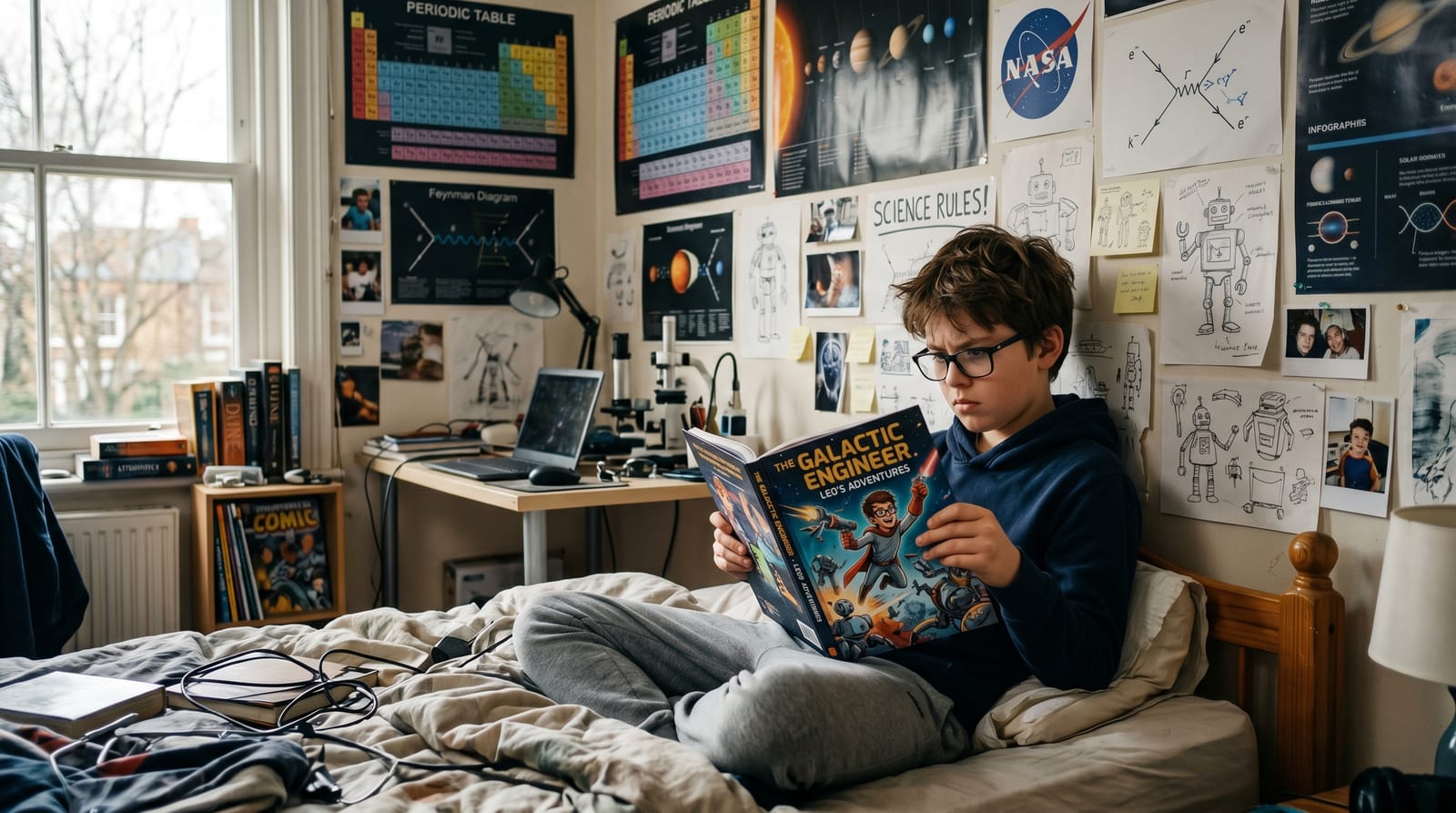
There is a distinct, almost electric shift that happens when a child moves from the whimsical world of early childhood picture books into the expansive territory of middle-grade literature. This period—spanning roughly from ages eight to fourteen—is often described by educators and psychologists as a "liminal space." It is the bridge between the security of home and the wide, often daunting world of adolescence.
For parents, watching this transition can feel like a bittersweet whirlwind. One day, your child is asking for a bedtime story about a talking bear; the next, they are immersed in a complex graphic novel about intergalactic rebellion or the intricate hierarchies of Greek mythology. They are no longer just learning to read; they are reading to discover who they are.
This is where the unique power of the middle-grade genre meets the innovative potential of personalized books. While traditional middle-grade fiction offers a window into other lives, personalization offers a mirror. In {YEAR}, the role of the protagonist has never been more vital for the "tween" reader.
The Quest for Self: Why Middle-Grade Matters
Middle-grade literature is defined by its focus on "firsts." It’s the first time a character might question authority, the first time they navigate a complex friendship rift, or the first time they realize the world isn't as black-and-white as they once thought. Themes of identity, belonging, and agency are the heartbeat of these stories.
When a young reader is at this crossroads, their engagement with a story changes. They are looking for "themselves" on the page. They want to see their quirks, their neurodivergence, their cultural heritage, and their specific brand of courage reflected back at them. As we explore in our piece on the evolution of the modern picture book, the narrative needs of a child evolve as they grow, moving from simple recognition to deep, emotional resonance.
Personalized books for this age group take this a step further. By placing the child directly at the center of the conflict, the story stops being a passive observation and becomes a lived experience. It allows a middle-schooler to "test-drive" different versions of themselves in a safe, imaginative environment.
From Earth to the Stars: Personalization in High-Stakes Adventures
One of the most enduringly popular sub-genres within middle-grade is the space epic. There is something about the vastness of the cosmos that perfectly mirrors the internal expansion a ten-year-old feels. Source material often highlights how space missions and intergalactic portals serve as metaphors for the journey beyond the "Earth" of one's own family and into the unknown.
When a child sees their own name on the flight manifest of a mission to Mars, the stakes of the story change. It is no longer just a "NASA story"; it is their mission. This level of immersion can be a game-changer for reluctant readers. If a child has struggled to connect with traditional prose, being the one who solves the oxygen leak or negotiates with an alien diplomat provides a powerful incentive to keep turning the page.
At StorytimeHero, we’ve seen how this sense of agency builds confidence. When a child is the hero of an adventure, they aren't just reading about bravery—they are practicing it. This is a core part of what we call the protagonist effect, where the lines between the reader and the hero blur to create lasting psychological benefits.
Mythology and the Modern Epic: Connecting to Global Heritage
Beyond the stars, middle-grade readers are often drawn to the ancient. Mythology—whether it’s the well-trodden paths of Olympus or the rich, diverse legends of the Monkey King and global folklore—provides a framework for understanding the world.
For a long time, mythology in children's literature was somewhat narrow, often focusing exclusively on Western traditions. However, the modern middle-grade landscape has exploded with diverse voices bringing global mythologies to the forefront. This is an essential development for {YEAR}, as it allows children from all backgrounds to see their own cultural legacies treated with the grandeur of an epic.
Personalized books can act as a bridge here. Imagine a child not just reading about a hero from their culture’s folklore, but standing alongside them. By integrating a child’s identity into these "age-old" stories, we validate their place in history. It tells the child: You are part of this lineage. These stories belong to you. This deepens the emotional bridge between the reader and the text, making the lessons of the myth feel personal rather than academic.
The Rise of the Visual Narrative: Graphic Novels and Engagement
We cannot discuss middle-grade today without acknowledging the massive impact of graphic novels. Once dismissed as "not real reading," graphic novels are now recognized as a sophisticated medium that requires high levels of visual literacy and emotional intelligence.
For many middle-schoolers, the combination of vivid illustrations and concise text is the "hook" that keeps them reading during the busy summer months. Graphic novels often tackle heavy themes—racism, sexism, neurodivergence, and societal expectations—in a way that feels accessible and immediate.
Personalization in a more visual or "graphic" style allows for a unique level of representation. When a child can see a character who looks like them navigating a complex social situation, it provides a blueprint for real-world resilience. This aligns with the modern picture book trends we see today, where the "participatory page" is becoming the standard for high-quality children’s media.
Supporting the "Tough Age" with Custom Narratives
Middle school is often categorized as a "tough age." It’s a time of rapid physical and emotional change, where the desire for independence often clashes with the need for security. Parents are often looking for tools to help their children navigate these choppy waters.
Personalized books offer a unique parenting "ally." They provide a way to address specific challenges—like starting a new school, dealing with a loss, or building self-esteem—without being "preachy." When the child is the hero, the "moral" of the story isn't something being told to them; it’s a realization they reach through their own fictional actions.
By choosing stories that reflect the child's actual interests—whether that’s coding, soccer, or ancient Egypt—parents can show that they truly "see" their child’s evolving identity. This reinforces the family bond during a time when many tweens begin to pull away. It’s about anchoring childhood narratives in a way that remains relevant as the child grows.
Why Personalization is the Future of Middle-Grade
As we look toward the rest of {YEAR} and beyond, the trend toward hyper-personalization in all forms of media is only increasing. However, in the world of books, this isn't just about "customizing" a product; it’s about honoring the individual journey of the reader.
Middle-grade readers are at a stage where they are "trying on" different identities like costumes. Personalized books give them a high-quality, beautifully written wardrobe to choose from. Whether they are exploring the deep ocean, fighting mythological beasts, or simply navigating the halls of a middle school, being the hero of the story changes the way they see themselves in the real world.
At StorytimeHero, we believe that every child deserves to be the hero of a story that feels as big and as important as they do. By synthesizing the best elements of middle-grade—adventure, diverse representation, and emotional depth—with the magic of personalization, we can help the next generation of readers find their voice.
---
FAQ: Personalizing the Middle-Grade Experience
Q: Isn't my child too old for personalized books?
A: Not at all! While early personalized books focused on simple name-drops, modern personalization for middle-grade (ages 8-12+) focuses on character traits, interests, and complex decision-making. At this age, personalization is less about the "novelty" and more about identity and representation.
Q: Can personalized books help a reluctant reader in middle school?
A: Yes. Many reluctant readers struggle because they don't see the relevance of the story to their own lives. When a child is the protagonist, their "buy-in" increases significantly. They are more likely to push through challenging vocabulary if they are the ones who need to solve the mystery or save the day.
Q: How do I choose the right theme for my tween?
A: Look at what they are naturally gravitating toward. If they love Percy Jackson, look for mythology-based personalization. If they are obsessed with Minecraft or NASA, look for adventure or sci-fi themes. The goal is to meet them where their interests already lie.
Q: Are these books "real" literature?
A: Absolutely. The quality of writing in the middle-grade space is incredibly high. A well-crafted personalized book uses the same narrative structures, character arcs, and thematic depth as any best-selling middle-grade novel—it just happens to have your child at the center of it.
---
Related Reading
To learn more about how stories shape the lives of young readers, explore these articles from the StorytimeHero library:
Free preview checklist
Get the personalized book gift checklist
Know what photo to use, what to write in the dedication, and what to review before ordering.