How Personalized Books Support Modern Parenting | StorytimeHero
Start a cover preview
Parenting in the modern era often feels less like a quiet walk in the park and more like managing a high-stakes, multi-departmental production. Between the logistics of school runs and the emotional weight of raising resilient humans, the "mental load" is a very real, very heavy burden. We find ourselves constantly toggling between being the nurturer, the chauffeur, the chef, and—perhaps most exhaustingly—the enforcer.
One of the most difficult hurdles for modern parents is the feeling of being the "villain" in their own home. Whether it’s holding the line on a 7:00 PM bedtime or insisting that vegetables come before dessert, the friction of maintaining boundaries can wear down even the most patient caregiver. This struggle is often compounded by external voices—well-meaning relatives or friends—who might label these necessary routines as being "too strict" or "no fun."
At StorytimeHero, we believe that the tools we use to connect with our children should do more than just entertain. They should act as a bridge. Personalized books are emerging as a surprising and effective ally in the parenting journey, offering a unique way to validate family values, ease transitions, and transform the "bad guy" dynamic into a shared family narrative.
The "Boundary" Burden: Moving Beyond the Power Struggle
Every parent knows the sigh that comes when they have to say "no." It isn’t that we enjoy being the fun-police; it’s that we know the consequences of a dysregulated, overtired child the next morning. However, when a child feels that a rule is an arbitrary whim of a parent, it often leads to a power struggle.
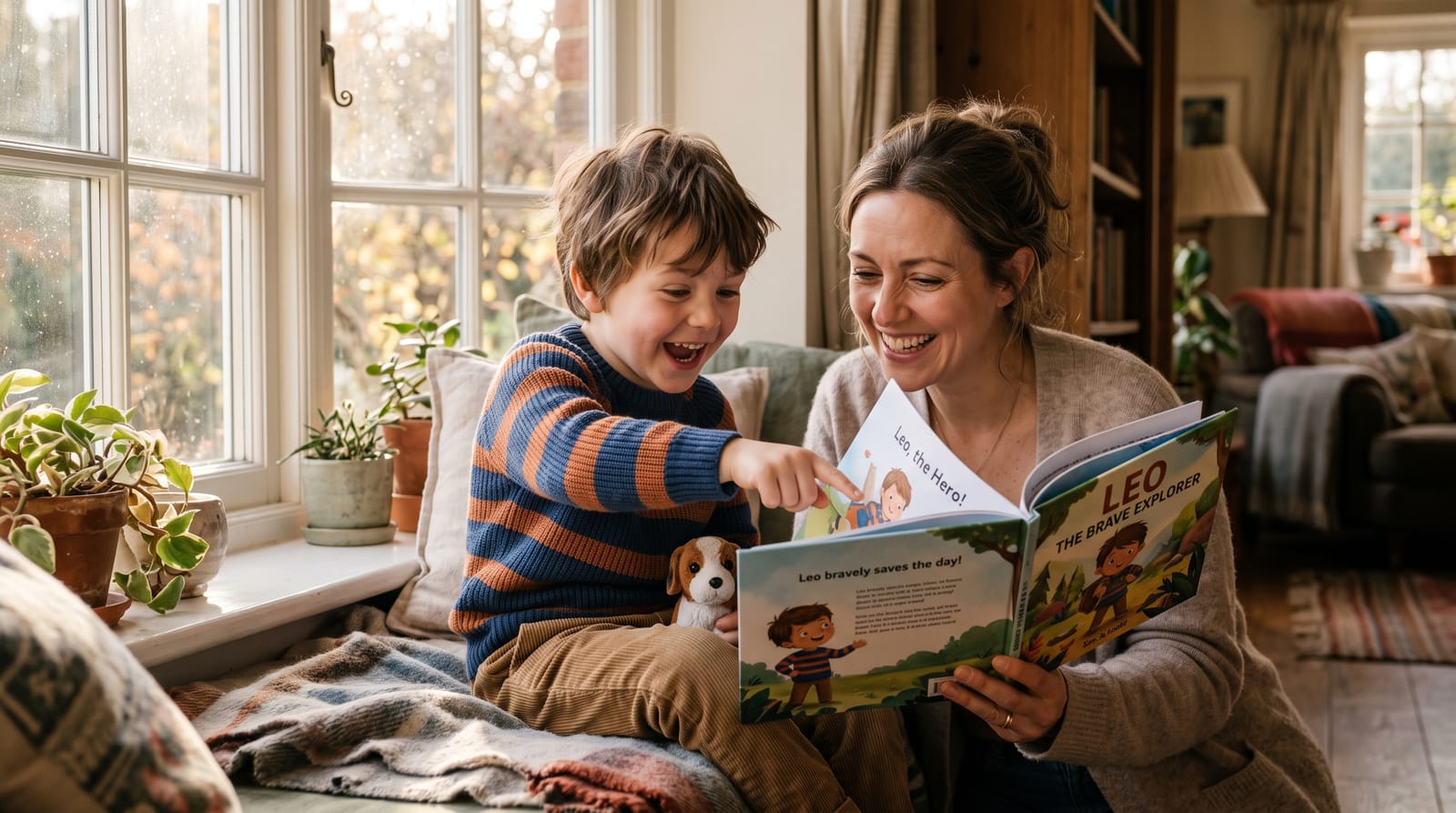
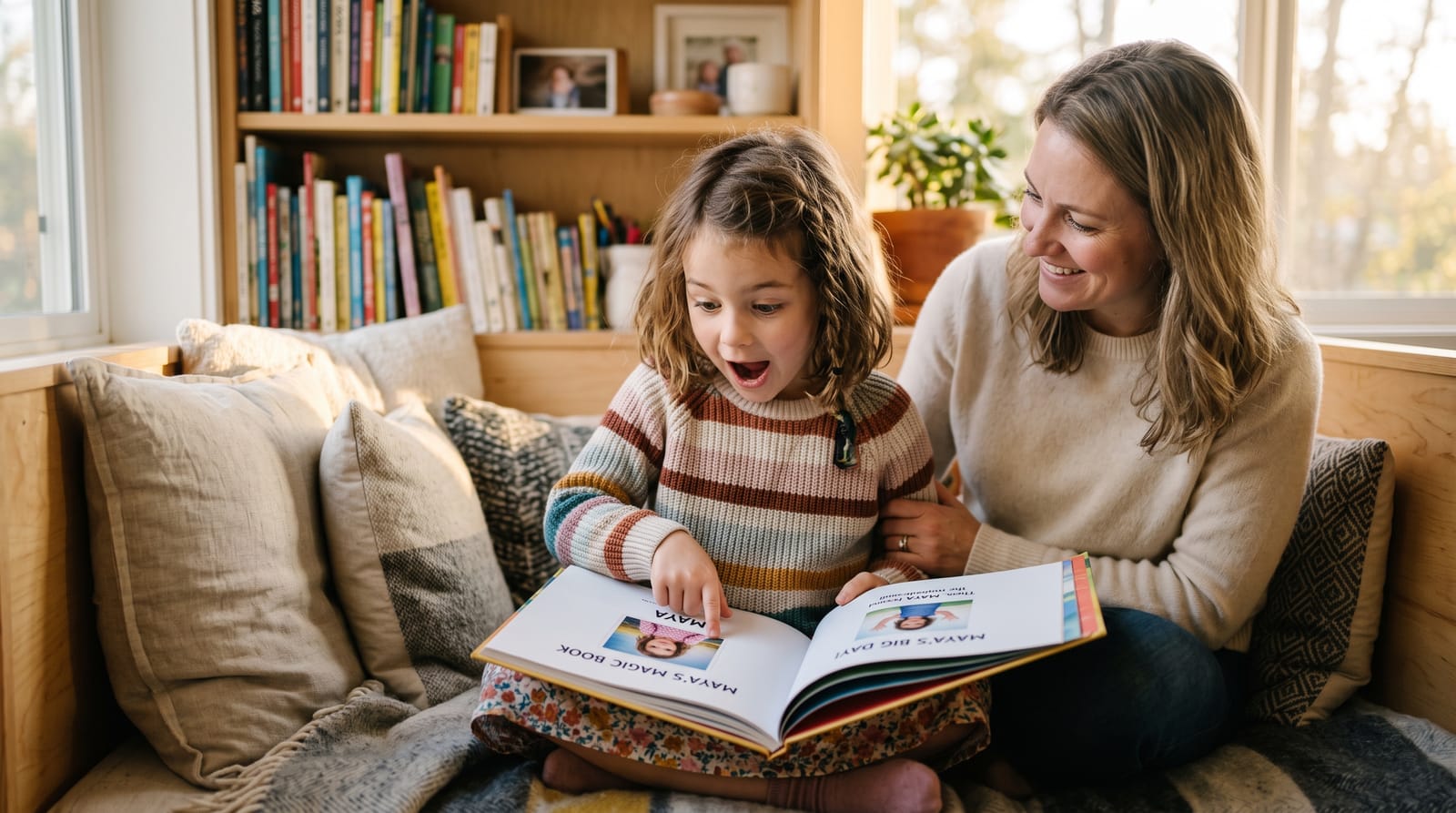
This is where the magic of a personalized story comes into play. When a child sees themselves as the protagonist of a book—literally seeing their name and likeness navigating a world with its own set of rules—the narrative shifts. Instead of a rule being something imposed on them by a parent, it becomes a part of their own "hero’s journey."
For instance, a story that mirrors a child’s evening routine doesn't just tell them to brush their teeth; it illustrates the character’s growth and readiness for the next day's adventures. By externalizing the routine into a book, parents can move away from direct confrontation and toward a collaborative reading experience. The book becomes the "third party" that reinforces the value of the routine, allowing the parent to return to the role of the warm, supportive guide rather than the strict enforcer.
Validating the "Why" Behind the Rules
Children are naturally curious, and they often push boundaries because they don't yet understand the "why." In a world where they are frequently told what to do, they crave agency. Personalized books provide a safe space to explore the logic of a household.
If your family places a high value on tidying up or being kind to siblings, seeing those actions played out by a character who looks like them provides a powerful form of social modeling. It helps the child internalize these values, making them part of their personal identity. You aren't just a parent who makes them pick up toys; you are a family that takes care of its space so that more fun can happen tomorrow. This subtle shift is a key part of supporting your parenting journey with personalized books.
Easing the Mental Load: Automation for the Heart
We live in an age of convenience. We can have dog food delivered on a schedule, our groceries curated by an app, and our calendars synced across four different devices. These tools are designed to reduce the "mental load"—the constant hum of "did I remember to do X?" that plagues the modern brain.
However, the emotional aspects of parenting—teaching empathy, building confidence, and cementing family bonds—cannot be outsourced to an algorithm. But they can be supported by the right resources.
Personalized books act as a form of "emotional automation." They take the heavy lifting out of explaining complex concepts or reinforcing daily habits. Instead of having to find the right words every single night to explain why we are brave or why we share, the book does it for you. It provides a consistent, high-quality script that you can return to again and again.
By integrating these stories into your daily life, you are essentially creating a narrative glue that holds your family's culture together. It’s one less thing you have to "figure out" in the heat of a tantrum or the exhaustion of a long day. The story is already there, ready to remind both you and your child of who you are and what you value.
Handling the "No Fun" Label and External Pressures
One of the most painful experiences for a parent is having their boundaries undermined by people they love. We’ve all been there: a relative suggests a late-night treat or a skipped nap, and when you hold your ground, they turn to the child and say, "Oh, Mommy is being no fun today!"
This type of passive-aggressive commentary is more than just annoying; it’s disrespectful to the hard work you put into keeping your child regulated and healthy. It casts the parent as the obstacle to joy rather than the provider of safety.
Personalized books can serve as a gentle but firm "manifesto" for your family’s way of life. When these books are read in front of extended family, they communicate the family’s standards in a non-confrontational way. They show that the "rules" aren't a mood—they are a core part of the child’s story. It is much harder for a relative to undermine a routine when the child is proudly showing off a book that celebrates that very routine.
Furthermore, these books help children develop the language to advocate for themselves. A child who has read about their own need for "recharging" (sleep) or "fueling up" (healthy food) is more likely to understand that these aren't punishments, but ways to stay strong and happy. This internal confidence helps them—and you—weather the opinions of others.
Setting and Reaching Parenting Goals in {YEAR}
As we look toward the future, many parents are setting resolutions that move away from "doing more" and toward "being more present." Common goals include:
- Reducing screen time in favor of tactile activities.
- Establishing a more peaceful bedtime routine.
- Building a stronger sense of family identity.
- Encouraging emotional intelligence and self-regulation.
Personalized books are uniquely suited to help reach these milestones. Because they are inherently high-interest—after all, who is more interesting to a toddler than themselves?—they naturally compete with the allure of a tablet or TV. They turn the "chore" of reading into a highlight of the day.
If your goal is to build a more cohesive family culture, these books act as a permanent record of your child's place within the family unit. They aren't just stories; they are artifacts of belonging. In a world that can often feel fragmented, having a physical book that says "You belong here, and this is how we live" is a powerful anchor for a developing child.
The Science of Seeing Yourself: Why Personalization Works
Why does a child respond so much more intensely to a book with their name in it than a generic story? It’s a psychological phenomenon known as the "Self-Reference Effect." We are all wired to remember and engage with information more deeply when it relates to ourselves.
For a child, this effect is amplified. At an age where they are still figuring out where they end and the world begins, seeing themselves in a book provides:
- Increased Focus: They pay closer attention to the narrative and the "lessons" within it.
- Enhanced Empathy: By seeing "themselves" navigate a problem, they practice the emotional skills needed to solve that problem in real life.
- Boosted Self-Esteem: Being the hero of a book sends a clear message: "I am important. My story matters."
When you combine this psychological impact with the warmth of a parent's voice during a bedtime reading, you create a perfect environment for learning and connection. This is the heart of how personalized books support modern parenting.
Practical Tips for Using Personalized Books as Parenting Tools
To get the most out of these stories, consider how you can integrate them into the "friction points" of your day:
- The Transition Anchor: If your child struggles with moving from play to dinner, or dinner to bath, read a personalized story that features those transitions. Use the book as a "preview" of what is coming next.
- The Reconnection Ritual: After a day where you've had to be "the enforcer" more than usual, use a personalized book at bedtime to reset. It’s a way of saying, "Even when we have hard moments, you are still my hero, and I love our story."
- The Boundary Shield: When visiting relatives, bring your child's favorite personalized book. It serves as a familiar comfort for the child and a subtle reminder to others of the routines that keep your child happy.
Conclusion: You Are the Hero of Your Parenting Story
Parenting is an endurance sport. It requires a level of consistency and emotional labor that is often invisible to the outside world. While personalized books can't do the dishes or wake up with the toddler at 5:00 AM, they can alleviate some of the emotional friction that makes those tasks harder.
By using these stories to frame your family's values, you aren't just reading a book—you are building a foundation of mutual respect and understanding. You are moving from being the "no fun" enforcer to being the co-author of a beautiful, well-regulated, and deeply connected family life.
In {YEAR}, let’s give ourselves permission to use the tools that make this journey a little lighter. StorytimeHero is here to help you turn the daily grind into a daily "once upon a time."
---
Frequently Asked Questions
Related Reading
Free preview checklist
Get the personalized book gift checklist
Know what photo to use, what to write in the dedication, and what to review before ordering.