How Personalized Books Support Modern Parenting | StorytimeHero
Start a cover preview
The modern parenting experience often feels like a collection of contradictions. We are more connected to our children than any generation before us, yet we frequently feel more isolated. We have access to an infinite library of developmental research, yet we often find ourselves too exhausted by 6:00 PM to implement a single "enriching" activity. From the visceral need to protect our children from a chaotic world to the simple, desperate desire for ten minutes of quiet on the sofa, the hurdles of raising humans in {YEAR} are unique, heavy, and deeply personal.
At StorytimeHero, we believe that the tools we use to navigate these hurdles should be just as personal. While a standard picture book offers a lovely escape, a personalized book serves a much more functional role in the parenting toolkit. It isn't just a story; it is a bridge between the parent we want to be and the reality of the day we actually had.
The "Survival Mode" Solution: Bonding Without the Burnout
Every parent knows the feeling of "running on empty." There are days when the mental load of managing a household, a career, and the emotional fluctuations of a toddler feels like a marathon run with no finish line in sight. In these moments, the concept of "horizontal parenting"—finding ways to engage and play while physically resting—becomes less of a "lazy" hack and more of a vital survival strategy.
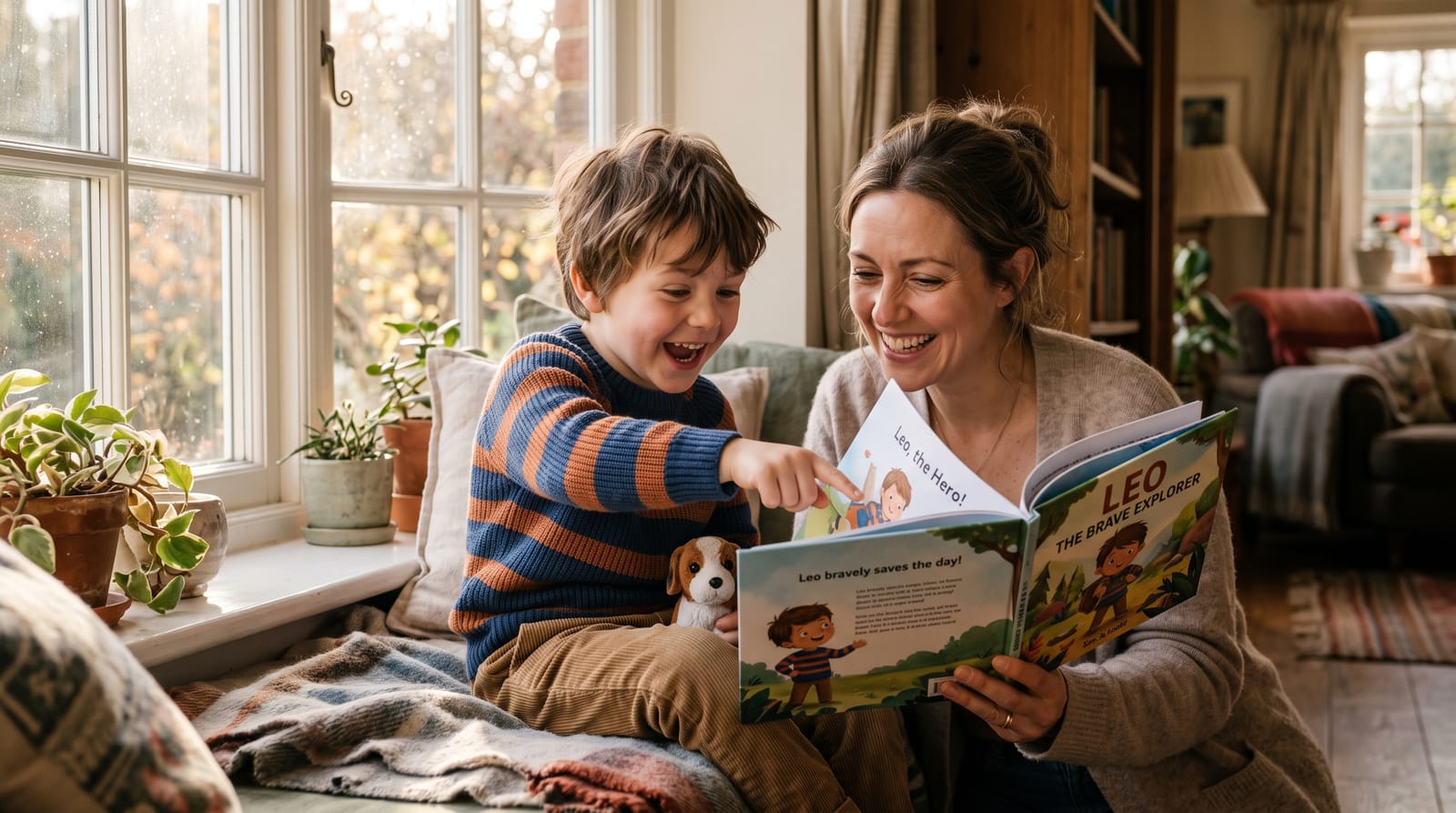
Personalized books are the ultimate tool for these low-energy moments. When you are too tired for a game of tag or a complex building project, opening a book where your child is the protagonist allows for deep, meaningful connection without requiring a massive output of physical energy. Because the child sees themselves on the page, their engagement level naturally spikes. They aren't just listening to a story; they are witnessing their own potential.
This high-engagement, low-effort interaction helps alleviate the "parental guilt" that often accompanies exhaustion. By choosing a story that features your child, you are providing them with the "quality time" they crave, even if you’re reading it while propped up on three pillows. It’s a way to say, "I see you, and you are important," even when you don't have the words or the stamina to say it through active play.
For more strategies on managing the clock, see our guide on The 5-Minute Reading Method for Busy Parents.
Bridging the Physical and Emotional Gap
One of the most primal anxieties of parenting is the realization that we cannot always be physically present. Whether it’s a late shift at work, a business trip, or the complexities of a co-parenting arrangement, the "gap" between parent and child can feel like a source of constant friction and worry. We worry that our influence is fading or that our children feel less secure in our absence.
Personalized books act as a narrative anchor during these times of separation. When a child reads a story where they—and perhaps their family members—are the heroes, the book becomes a tangible representative of that bond. It is a piece of the parent that stays behind.
For the parent who is struggling with the guilt of being away, these stories offer a way to "reconnect" before the physical reunion even happens. By centering the child’s identity within a safe, adventurous, or loving narrative, you are reinforcing their sense of belonging. You are telling them that even when you aren't in the room, they are the center of your world. This creates a psychological "safety net" that helps children navigate the world with more confidence, knowing their family story is always with them.
In many ways, these books provide Parenting Confidence Through Personalized Stories, helping both the adult and the child feel more competent in their roles within the family unit.
Turning Resolutions into Reality: Supporting Developmental Goals
As we move through {YEAR}, many parents are looking at their family dynamics and setting goals. Perhaps the goal is to establish firmer boundaries, to organize the chaos of the playroom, or to simply be more "present." However, the transition from a resolution to a daily habit is where most of us stumble.
Personalized books can be the "secret weapon" for meeting these developmental and behavioral goals. Children are notoriously resistant to direct lectures. If you tell a toddler they need to be more organized, they might tune you out. But if they see a character with their name and likeness learning how to manage their "treasures" or navigate a tricky social situation, the message lands differently.
This is particularly effective for neurodivergent children or those who thrive on routine. For instance, using ADHD: Using Stories to Rehearse Routines allows a child to "practice" a behavior in their mind before they have to do it in real life. When the hero of the book—who looks just like them—follows a bedtime routine or handles a transition with ease, it creates a mental blueprint for the child to follow. It turns a "parenting goal" into a "story goal," which is far more inviting for a young mind.
The Psychological Shield: Building Resilience in a Loud World
The world can feel like a very big, very loud place for a small child. As parents, we often feel a desperate urge to shield them from every discomfort, yet we know that true growth comes from developing resilience. The challenge is finding the balance between protection and preparation.
Personalized books help build this "internal shield" by placing the child in the role of the problem-solver. In a StorytimeHero book, the child isn't just a bystander; they are the one who finds the solution, helps the friend, or braves the forest. This "hero's journey" is foundational for self-esteem.
When a child consistently sees themselves overcoming obstacles in print, they begin to internalize that capability. It shifts their self-narrative from "I am small and things happen to me" to "I am the hero of my own story." This shift is one of the greatest gifts a parent can give. It addresses the deep-seated parenting desire to keep them safe by giving them the internal tools to keep themselves safe—or at least, to feel capable of facing whatever comes their way.
This approach is part of what we call Supporting Modern Parenting with Personalized Books, where the narrative serves as a foundation for emotional intelligence.
From "No" to "Let's Read": Ending the Bedtime Power Struggle
Let’s talk about the most common parenting hurdle of all: the bedtime battle. After a long day, the last thing most parents want is a negotiation over how many sips of water are required before lights out. These power struggles usually stem from a child’s desire for autonomy and a parent’s desire for rest.
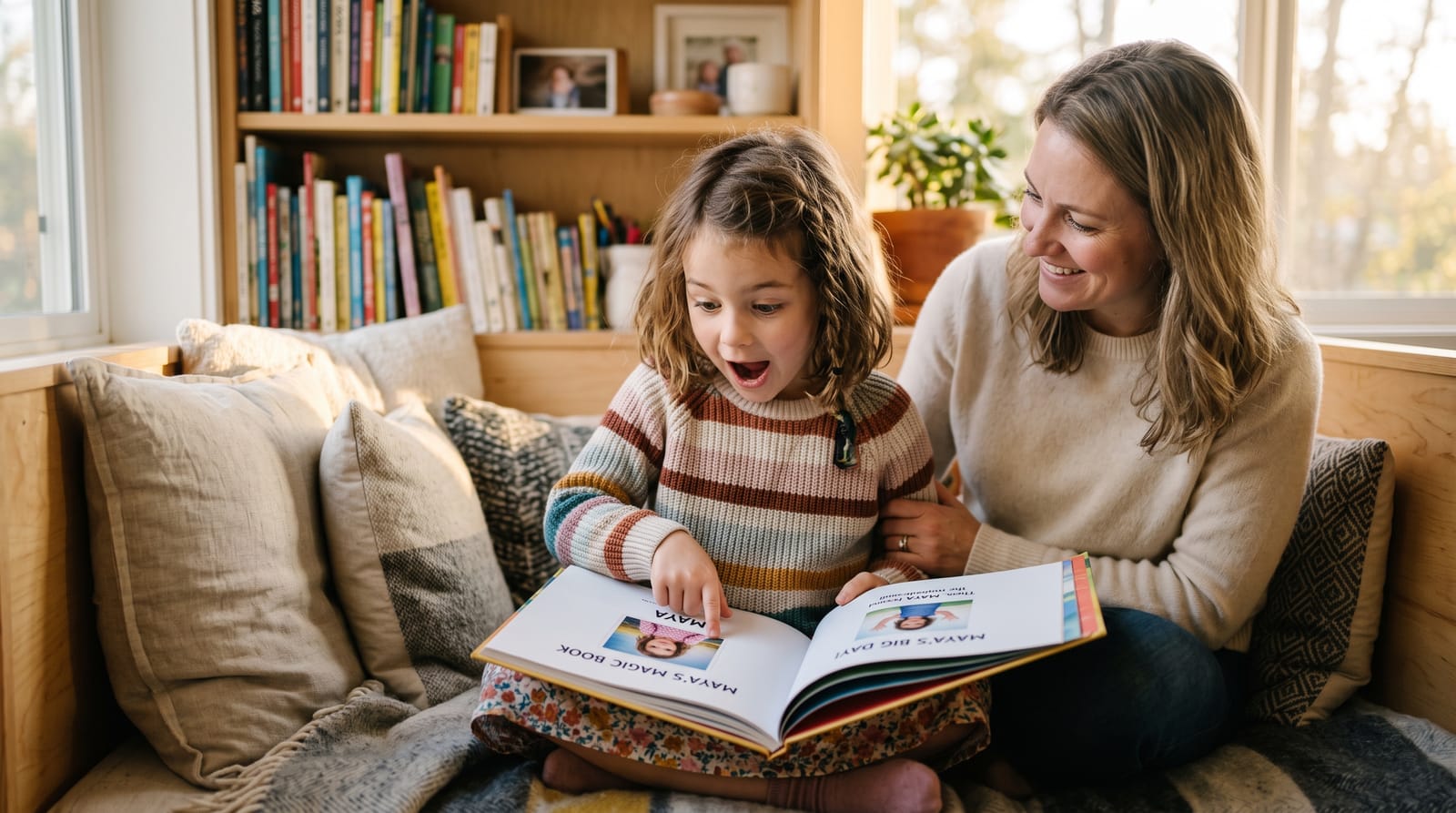
Personalized books can diffuse these power struggles by turning the "must-do" task of reading into a high-value reward. Because the child is the star, the book has a "magnetic" quality that traditional books might lack on a Tuesday night. It gives the child a sense of agency—they aren't just being told what to do; they are being invited to see what their "book self" is up to.
By integrating these stories into the nightly rhythm, you create a "warm" transition from the busyness of the day to the stillness of sleep. It’s a moment where the parenting "work" ends and the parenting "connection" begins. It’s a reset button for the relationship, ensuring that the last interaction of the day is one of shared wonder rather than shared frustration.
Why Personalization is the Future of the Parenting Toolkit
As we look at the landscape of childhood in {YEAR}, it's clear that the "one-size-fits-all" approach to parenting and media is fading. We recognize that every child is an individual, and their library should reflect that. Personalized books aren't just a novelty; they are a response to the modern need for representation, connection, and practical parenting support.
They allow us to:
- Validate the child's identity in a world that often overlooks them.
- Support weary parents with high-impact, low-stress bonding tools.
- Bridge the distance created by work, travel, or family transitions.
- Reinforce positive behaviors without the friction of a lecture.
At StorytimeHero, our goal is to make these benefits accessible to every family. We know that you are doing the hard work of parenting every single day. We just want to give you a story that makes that work a little bit lighter, a little bit warmer, and a whole lot more magical.
---
Frequently Asked Questions
How do personalized books help with separation anxiety?
Personalized books serve as a "transitional object." When a child sees themselves in a story alongside their family members, it reinforces the permanence of those bonds. Even when a parent is physically absent, the story remains, providing a narrative reminder that they are loved and that the family unit is intact.
Can these books really help with behavioral goals?
Yes. Through a psychological concept called "self-referencing," children (and adults) process information more deeply when it is related to themselves. When a child sees a character with their name practicing a skill—like sharing or following a routine—they are more likely to model that behavior in real life because they have already "seen" themselves do it successfully.
What is the best age to start using personalized books for parenting support?
While even infants enjoy the rhythm of hearing their name, the "parenting support" benefits really peak between ages 2 and 7. This is the window where children are forming their self-concept, navigating big emotions, and beginning to understand their place in the world.
---
Related Reading
Free preview checklist
Get the personalized book gift checklist
Know what photo to use, what to write in the dedication, and what to review before ordering.