Supporting Modern Parenting with Personalized Books | StorytimeHero
Start a cover preview
Parenting, in its most honest form, often feels like a beautiful, relentless marathon where the finish line keeps moving. We are currently living in an era where the expectations placed on mothers and fathers are higher than ever, yet the communal support systems of the past have largely shifted. Between the mental load of managing a household and the emotional weight of wanting to "get it right," parents are looking for tools that don't just entertain their children, but actually support the family ecosystem.
While we often think of children’s literature as a tool for literacy, there is a growing realization that personalized books serve a much deeper purpose. They aren't just stories; they are a narrative bridge that connects the parent’s goals with the child’s imagination. In {YEAR}, as we navigate the complexities of digital distractions and busy schedules, these custom stories are emerging as a vital resource for the modern parent.
The "Horizontal Parenting" Hack: When Stories Do the Heavy Lifting
Every parent knows the feeling of the "5:00 PM slump." It’s that hour when the day’s energy has been spent, the "to-do" list is still a mile long, and your child is asking for high-energy play. This is where the concept of "horizontal parenting" becomes a survival skill—the art of engaging with your child while your body is at rest.
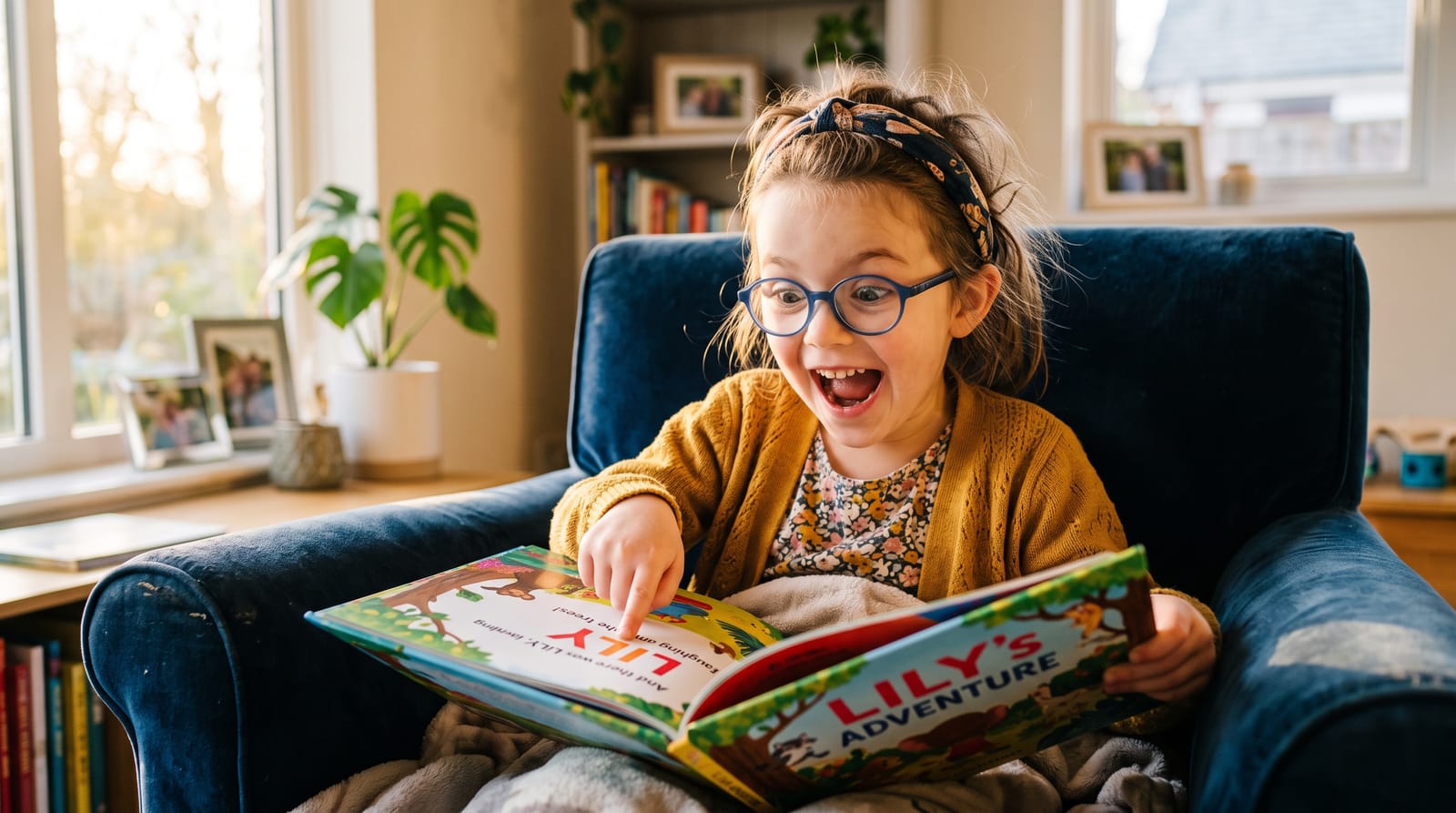
Personalized books are perhaps the ultimate tool for these low-energy moments. When a child sees themselves as the protagonist of a story, their level of engagement spikes. They aren't just listening to a story about someone else; they are witnessing their own adventures. This heightened focus allows a tired parent to provide a high-quality, bonding experience without needing to run around the backyard or build a living-room fort.
By making the child the hero, the story does the heavy lifting of maintaining attention. This creates a space for what many experts call "the 5-minute reset." Even in the midst of a chaotic day, sitting down for a 5-minute reading method allows the parent to breathe while the child feels seen, heard, and celebrated. It transforms a mandatory bedtime chore into a shared moment of recovery.
Bridging the Distance: Addressing the "Not Being There" Guilt
One of the most profound anxieties in modern parenting is the feeling of physical or emotional distance. Whether it’s a demanding work schedule, a military deployment, or the transition of a child starting school, the "primal" urge to protect and stay connected to our children is constant. We often worry about what happens when we aren't there to guide them or shield them from the world’s challenges.
Personalized books act as a narrative anchor in these situations. When a parent gifts a book where the child is the hero, they are essentially providing a "portable" version of their support. If a child is struggling with separation anxiety or a new environment, seeing a version of themselves overcoming obstacles in a book can provide a sense of internal strength.
This is particularly relevant for families navigating big life changes. A story that features the child's name and likeness serves as a constant reminder of their place within the family unit. It reinforces the idea that even when a parent is out of sight, the child is still the hero of their own life, backed by a family that believes in them. This building of parenting confidence through personalized stories is a subtle but powerful way to bridge the gap between "being there" and "letting go."
Anchoring Your Parenting Resolutions in Story
As we move through {YEAR}, many parents are setting goals to be more present, to establish firmer boundaries, or to foster better habits within the home. However, translating these "adult" goals into a language a three-year-old or six-year-old understands is notoriously difficult. You can’t exactly explain "emotional regulation" to a toddler mid-tantrum.
Personalized books provide a "sandbox" where these parenting goals can be rehearsed. If your goal is to help your child develop resilience, a book that depicts them trying, failing, and trying again becomes a blueprint for their real-world behavior. This is often referred to as the Live-Like philosophy, where children begin to model their actions after the "heroic" version of themselves they see on the page.
Instead of lecturing a child about kindness or bravery, parents can point to the book: "Remember when 'You' helped the lost kitten in our story? That was so brave." This shifts the dynamic from correction to celebration. It allows parents to meet their own resolutions—like being more patient or staying more connected—by using the book as a neutral, joyful third party in the conversation.
The Psychological Safety Net: Why Seeing Themselves Matters
There is a unique psychological phenomenon that occurs when a child sees their own name and image in a book. It’s more than just a novelty; it’s an affirmation of existence and importance. In a world that often feels vast and overwhelming, a personalized book creates a "micro-world" where the child is safe, capable, and central.
For parents, this serves as an emotional safety net. We want our children to grow up with a healthy sense of self-esteem and a clear understanding of their identity. By integrating personalization into their daily reading, we are essentially building an architecture of belonging within their minds. They learn that they are worth being the subject of a book. They learn that their story matters.
This is especially helpful for children who may feel "different" or who are struggling to find their place in social circles. When the "modern picture book" evolves to include the child directly, it bypasses the barriers of traditional media and speaks directly to the child's heart. It’s a way for parents to say, "I see you, and I think you are remarkable," without ever having to say the words out loud.
Creating a Shared History in a Fragmented World
Our lives are increasingly fragmented by screens, schedules, and the general noise of the 21st century. In this environment, creating a "shared family history" can feel like a daunting task. We take thousands of photos on our phones, but how often do we sit down to weave those moments into a cohesive narrative?
Personalized books at StorytimeHero are designed to be more than just gifts; they are intended to be keepsakes that document a specific chapter of a child’s life. They capture the child's current interests, their appearance, and the way their parents view them at this specific age.
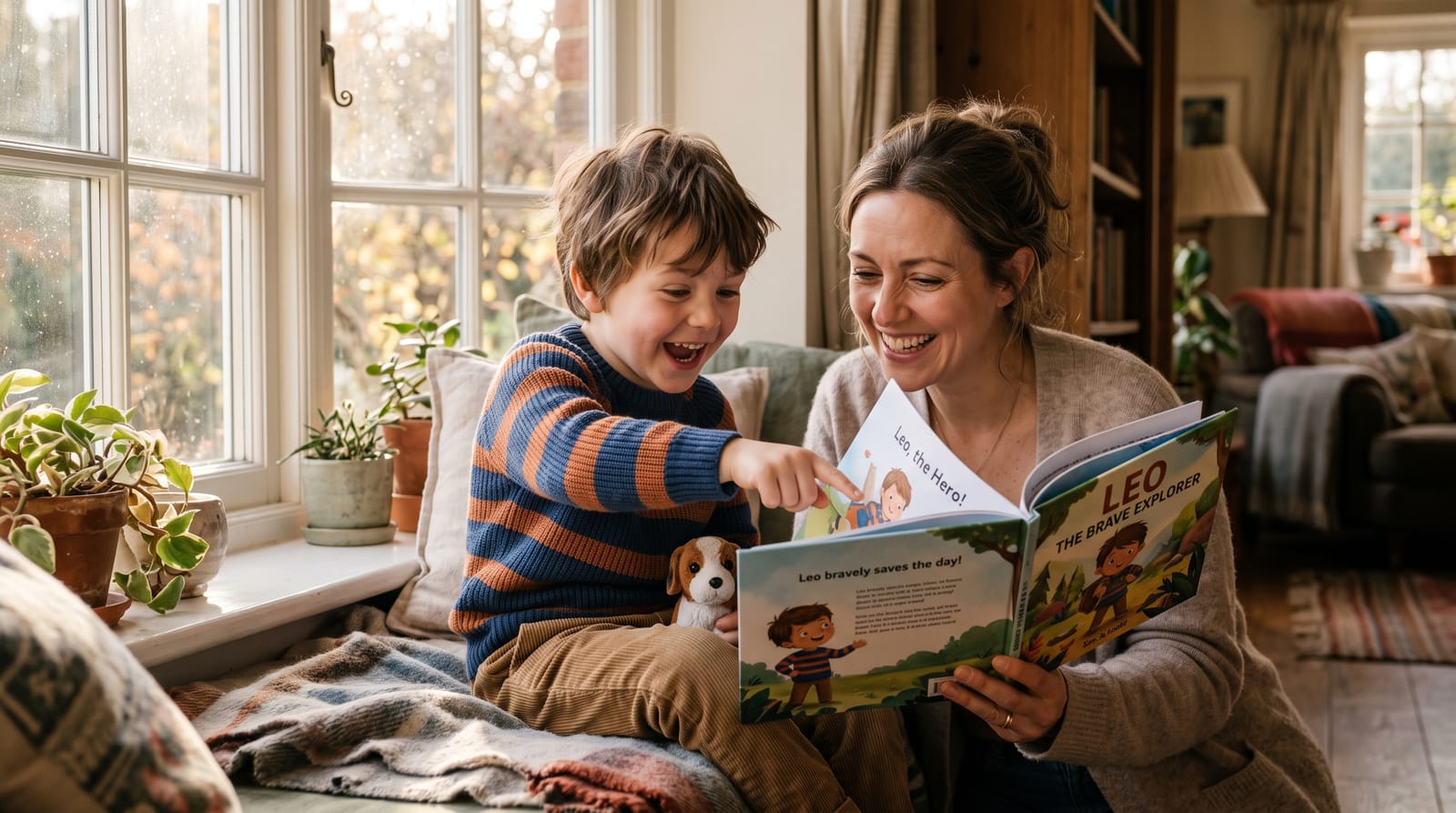
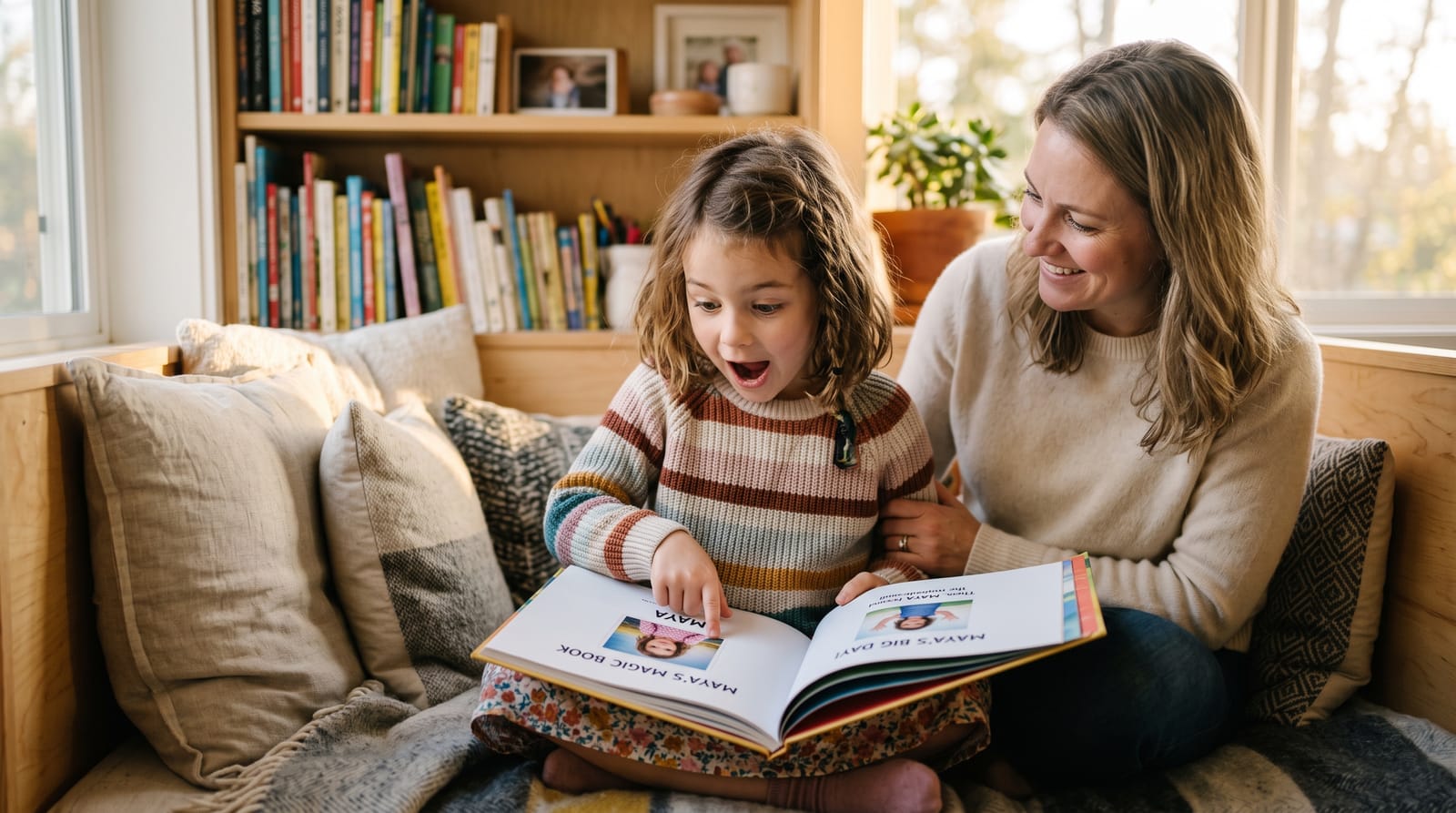
When a parent and child read a personalized book together, they are strengthening family bonds through a shared ritual. This ritual becomes a "narrative anchor" that provides stability in a changing world. Years from now, that book won't just be a story about a dragon or a space trip; it will be a record of the time their parent sat with them at the end of a long day and told them they were a hero.
Conclusion: The Quiet Power of Being the Hero
Parenting doesn't always require grand gestures or perfect resolutions. Often, the most effective parenting happens in the quiet, small moments—the minutes before the lights go out, the cuddle on the couch after a hard day, or the shared laugh over a silly rhyme.
Personalized books address the core needs of modern parenting by providing a tool that is both practical and deeply emotional. They help exhausted parents engage their children, they bridge the gap of physical distance, and they provide a framework for teaching the values we hold dear. By making your child the hero of the story, you aren't just giving them a book; you are giving them a vision of who they can become, and you are giving yourself a partner in the beautiful, messy journey of raising a human being.
---
FAQ: Parenting with Personalized Books
Q: Are personalized books actually better for learning than regular books?
A: While both are important, research suggests that children show higher levels of "self-referential" engagement with personalized books. When a child sees their name, they are more likely to stay focused, ask questions, and retain the vocabulary used in the story because the content feels personally relevant to them.
Q: At what age should I start using personalized books as a parenting tool?
A: You can start as early as infancy! For babies, hearing their name repeated in a story helps with name recognition and auditory processing. For toddlers and preschoolers, it helps with identity formation and engagement. Even older children (ages 6-9) benefit from the "hero" narrative, as it boosts their confidence during the transition to independent reading.
Q: Can personalized books help with specific behavioral issues?
A: Many parents use them as "social stories." By seeing a character that looks like them navigate a difficult situation—like sharing toys or going to the dentist—children can "rehearse" the positive behavior in a safe, fictional setting before they have to do it in real life.
Q: How do these books help with "parental guilt" regarding screen time?
A: Many parents feel guilty about using tablets or TV to get a break. Personalized books offer a "high-reward" alternative. Because they are so engaging, children often find them just as entertaining as a show, but the experience involves physical touch, eye contact, and language development that screens can't replicate.
---
Related Reading
Free preview checklist
Get the personalized book gift checklist
Know what photo to use, what to write in the dedication, and what to review before ordering.