ADHD: Using Stories to Rehearse Routines
Start a cover preview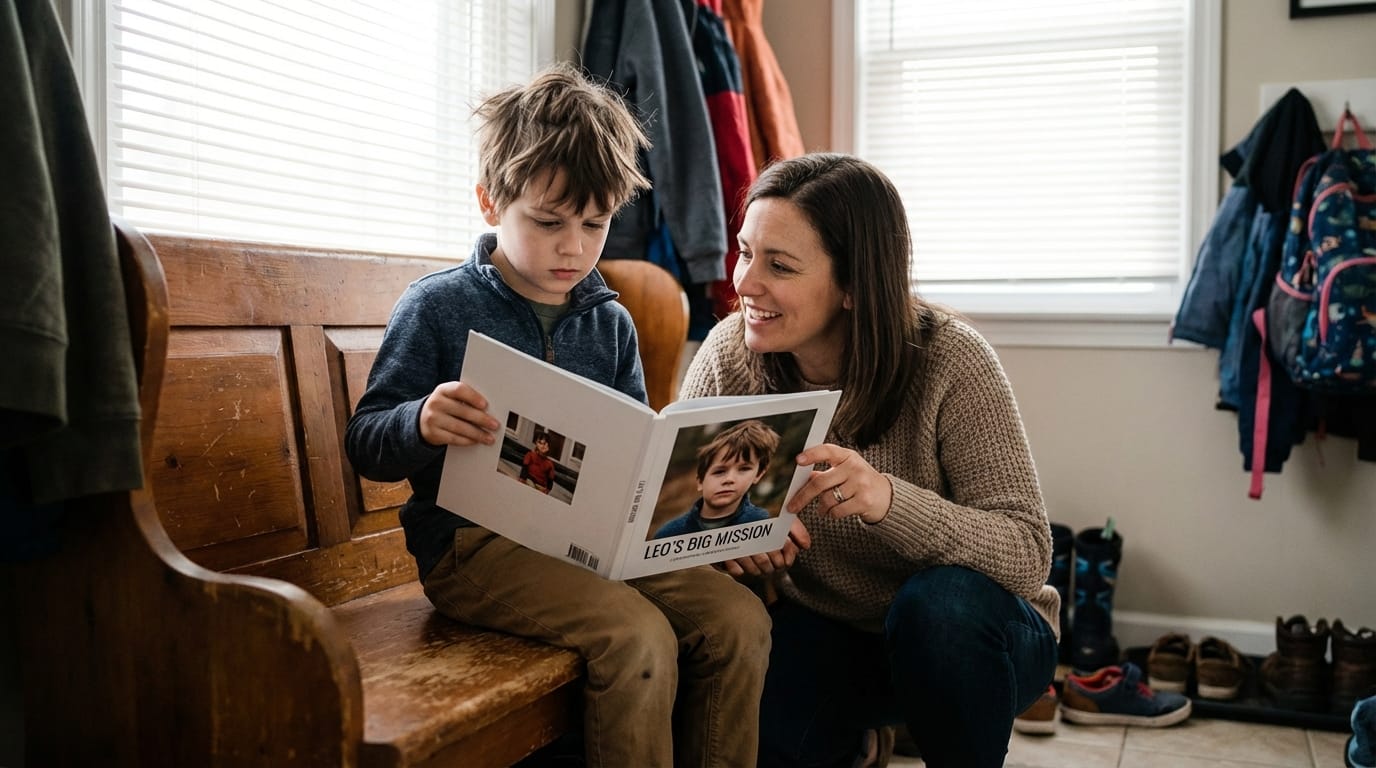
You know that feeling in the morning when you’ve asked your child to put on their shoes for the fourteenth time? You’re standing by the door, keys in hand, watching the clock tick toward "late," while your child is suddenly fascinated by a dust mote or a Lego brick they found under the couch. For parents of children with ADHD, this isn't just a "bad morning"; it’s a daily marathon. The struggle with executive function makes simple multi-step tasks feel like climbing Mount Everest. But what if you could give your child a mental map before the mountain even appears? Using ADHD stories to rehearse routines is a powerful (science-backed) way to help your child visualize success, reduce anxiety, and finally get those shoes on without a meltdown.
Why ADHD Makes Daily Routines Feel Like a Battle
To understand why ADHD stories to rehearse routines are so effective, we first have to look at what’s happening in an ADHD brain. Children with ADHD often struggle with "executive function." Think of executive function as the air traffic controller of the brain. It manages focus, memory, and the ability to plan steps in order.
For most kids, "get ready for school" is one big task. For a child with ADHD, that "one task" is actually twenty tiny, distracting tasks: find socks, find the right socks, put them on, find shoes, realize the laces are knotted, get distracted by a toy, forget what you were doing, and start all over.
This is often called "time blindness." Your child isn't being "naughty" or "lazy" when they ignore your instructions; their brain is literally struggling to sequence the events. They live in the "now," and the "future" (like being at school on time) feels very far away and abstract. This is where stories come in. Stories provide a linear, predictable structure that the ADHD brain can latch onto. By using personalized narratives, we can turn a chaotic morning into a predictable "mission" that they’ve already completed a dozen times in their head.
How ADHD Stories to Rehearse Routines Change the Game
When we talk about ADHD stories to rehearse routines, we are essentially using a technique called "mental rehearsal." Athletes do this all the time. A professional golfer will close their eyes and visualize the perfect swing before they ever touch the ball. They are priming their neural pathways for success.
For a child with ADHD, a story acts as a "dry run" for real life. When you read a story where they are the hero (literally seeing their own face in the illustrations), their brain begins to map out the steps of a routine as if they are actually doing them.
Personalized children's books take this a step further. When a child sees themselves as the main character, their "self-referential processing" kicks in. This is a fancy way of saying they pay way more attention because the story is about them. Instead of a generic character named "Billy" putting on his pajamas, it’s your child, with their uploaded photo, wearing their favorite red pajamas in the book. This creates a much stronger emotional connection and helps the routine stick in their long-term memory.
The Power of Visualizing the "Next Step"
One of the biggest hurdles for kids with ADHD is the transition. Moving from "playing with blocks" to "eating dinner" is a huge mental shift. This is where ADHD stories to rehearse routines become a parent's best friend.
In a personalized story, you can specifically highlight these transitions. You can show the hero (your child) hearing the dinner bell, finishing their last Lego tower, washing their hands, and sitting at the table. Because they’ve "seen" themselves do it in the book, the actual transition in real life feels familiar rather than jarring.
We often recommend that parents use AI-generated illustrations to make these scenes as realistic as possible. If the book shows your child in your actual kitchen or a room that looks like theirs, the "bridge" between the story and reality becomes even shorter. They aren't just reading a book; they are practicing their life.
Creating Your Child’s "Morning Mission" Story
Let’s look at a practical example. Suppose your child struggles with the morning rush. You can create a story where they are a superhero or a space explorer. In this world, getting dressed isn't a chore; it’s putting on their "super-suit."
The Story Arc might look like this:
- The Wake-Up Call: The hero hears the "command center" (the alarm or Mom’s voice).
- The Fuel-Up: The hero heads to the kitchen for their "power breakfast."
- The Gear-Up: The hero puts on their uniform (school clothes), making sure to check their "radar" (the clock).
- The Departure: The hero boards their "transport ship" (the car or bus) to head to their next adventure (school).
By framing the routine as a narrative, you remove the "nagging" element. Instead of saying, "Go brush your teeth," you can say, "Is the hero ready for the next page of the mission?" This shifts the dynamic from a power struggle to a shared game. You can find more ideas on how to structure these in our guide on personalized stories for kids.
Using ADHD Stories to Rehearse Routines for Bedtime Peace
Bedtime is another classic ADHD battlefield. The "winding down" process is incredibly difficult when your brain is naturally wired to seek stimulation. A personalized story can act as a natural sedative for the mind.
When you use ADHD stories to rehearse routines at night, the focus should be on "low-energy" sequences. The story should depict the child feeling their body get heavy, the warmth of the bath, the softness of their blanket, and the quietness of the room.
As you read the story together, your child isn't just listening; they are internalizing the feeling of being tired and safe. Because the book features their face, they see themselves in a state of calm. This helps combat the "FOMO" (fear of missing out) that many ADHD kids feel at bedtime. They see that the "hero" of the story is happy to go to sleep, which gives them "social permission" to do the same.
Overcoming "New Situation" Anxiety with Stories
Children with ADHD often struggle with "newness." A doctor's visit, a new school year, or even a birthday party can trigger a sensory overload or an emotional meltdown. This is because they can't predict what will happen next, and that lack of control is scary.
You can use custom storybooks to "pre-teach" these situations. If your child is nervous about the dentist, create a story where they go to the dentist. Show them sitting in the big chair, the bright light, and the "tooth vacuum."
- Step 1: Introduce the setting.
- Step 2: Identify potential triggers (the loud noise, the minty taste).
- Step 3: Show the hero using a coping skill (squeezing a fidget toy, taking deep breaths).
- Step 4: Show the successful outcome (a shiny smile and a sticker).
When the child actually gets to the dentist's office, it feels like a "re-run" of a show they’ve already seen. The brain says, "Oh, I know this part. I’m the hero who handles the tooth vacuum."
Practical Tips for Making Story-Based Routines Work
If you’re ready to start using ADHD stories to rehearse routines, here are some actionable tips to ensure they actually work:
- Keep it Short and Punchy: ADHD brains crave brevity. Don't make the story a 50-page epic. Focus on 5-8 key steps of the routine.
- Use "First/Then" Language: Incorporate the "First we do X, then we do Y" logic into the story text. This reinforces sequencing.
- Read it During "Green Zones": Don't try to read the story in the middle of a meltdown. Read it when your child is calm and regulated, like during a quiet afternoon or right before bed.
- Make it Interactive: Ask questions while reading. "Look, you’re putting on your blue shirt in the book! Which shirt are you going to wear tomorrow?"
- Use Real Faces: We can't stress this enough. The impact of personalized face books is significantly higher than generic illustrations for children with neurodivergence. It anchors their identity to the positive behavior.
Why "The Hero" Mindset Matters
Most kids with ADHD receive a lot of negative feedback throughout the day. They hear "no," "stop," "don't," and "why can't you just..." more than their peers. This can lead to low self-esteem and a feeling that they are "bad" at life.
When you put them in a story as the hero, you are flipping the script. You are showing them a version of themselves that is capable, organized, and successful. This builds "self-efficacy" (the belief that they can accomplish tasks). Over time, this confidence spills over into real life. They stop seeing themselves as the kid who always forgets their backpack and start seeing themselves as the hero who completes the "Morning Mission."
Beyond Routines: Building Social Skills
While routines are the primary use case, these stories are also incredible for social rehearsal. Many children with ADHD struggle with social cues or "blurting out" during conversations.
You can create stories that rehearse:
- Waiting for a turn: Show the hero waiting in line at the slide and feeling proud of their patience.
- Asking to join a game: Show the hero using their "brave voice" to ask friends to play.
- Handling a loss: Show the hero losing a board game, taking a deep breath, and saying "good game."
By rehearsing these social interactions in a low-stakes environment (a book), the child builds a "social library" they can pull from when they are on the actual playground.
Using StorytimeHero.ai to Build Your Routine Library
At StorytimeHero.ai, we’ve seen firsthand how personalized adventures can transform a household. Our platform allows you to upload a photo of your child, and our AI integrates their face into high-quality illustrations that match the story you’ve created.
Whether you need a story about the first day of kindergarten, a story about learning to use the potty, or a complex "Morning Mission" for a 10-year-old with ADHD, the process is designed to be easy for busy parents. You don't need to be an author; you just need to know what your child needs to practice.
Frequently Asked Questions
Free preview checklist
Get the personalized book gift checklist
Know what photo to use, what to write in the dedication, and what to review before ordering.