Kids with Anxiety: Personalized "Brave Story" Scripts to Help Them Conquer Fears
Start a cover preview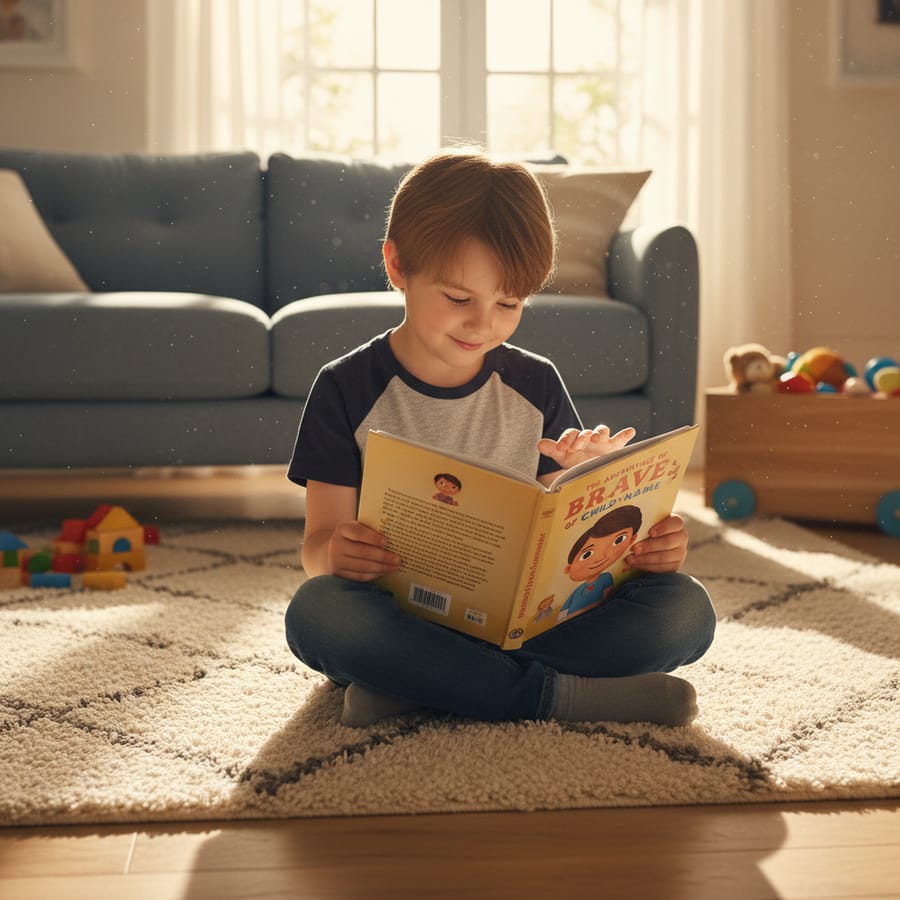
Every parent knows that heart-tugging moment when your child freezes up. Maybe it’s the night before the first day of school, or perhaps it’s the sight of a slide that looks just a little too tall. You see the wide eyes, the shaky hands, and that look of pure hesitation. For kids with anxiety, the world can often feel like a series of overwhelming mountains rather than a playground of possibilities. You want to help, but sometimes "you'll be fine" just doesn't cut it. You need a way to help them visualize success, and that is where personalized "Brave Story" scripts come into play. By putting your child at the center of their own adventure, you give them a roadmap to courage that they can see, touch, and believe in.
Why Personalized "Brave Story" Scripts Work for Kids with Anxiety
When a child struggles with anxiety, their brain is often stuck in a loop of "what if" scenarios. What if I get lost? What if the other kids don't like me? What if I can't do it? These thoughts are powerful because the child is the main character in these scary mental movies. To flip the script, we need to provide a different movie, one where they are the hero who overcomes the challenge.
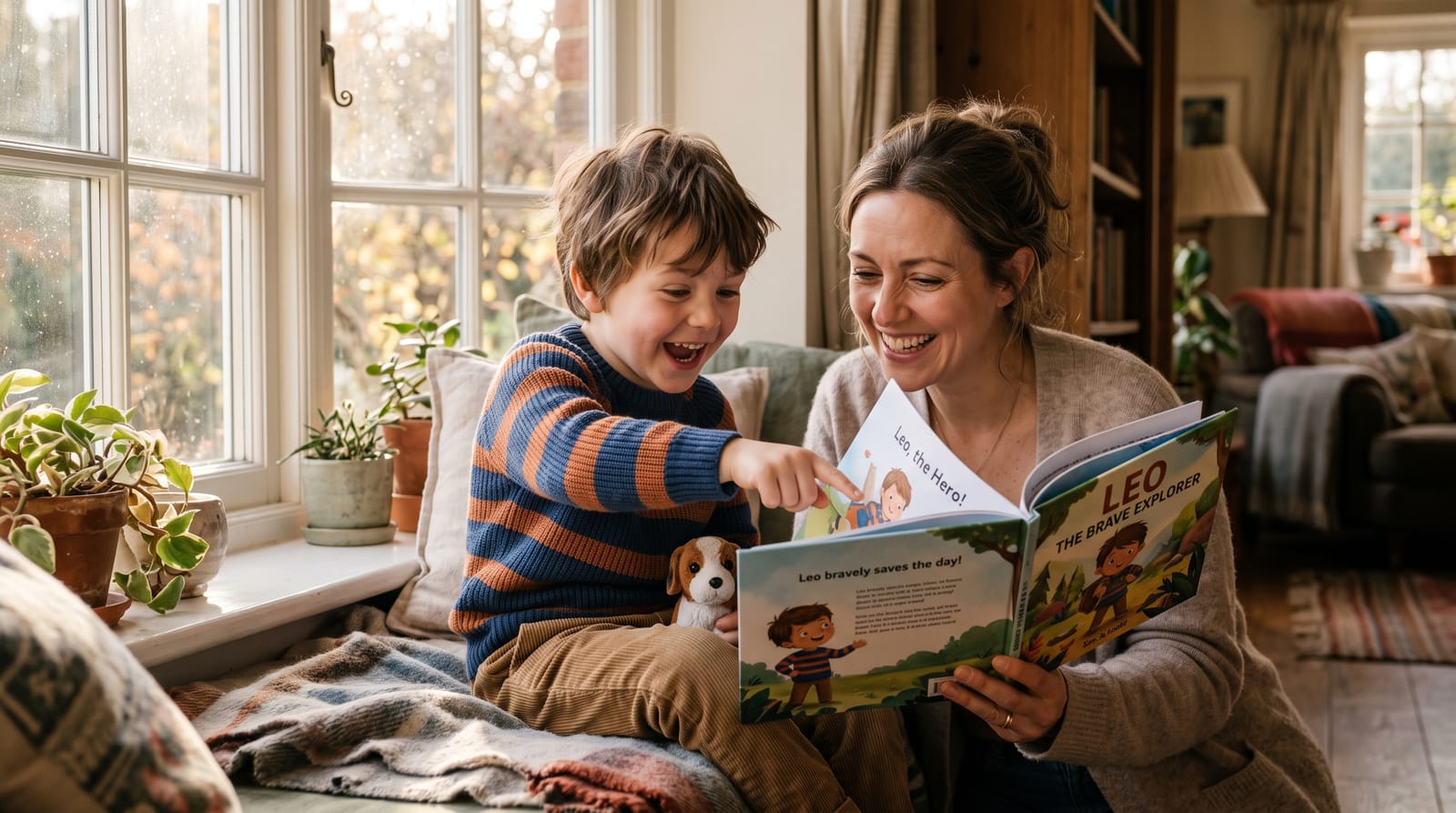
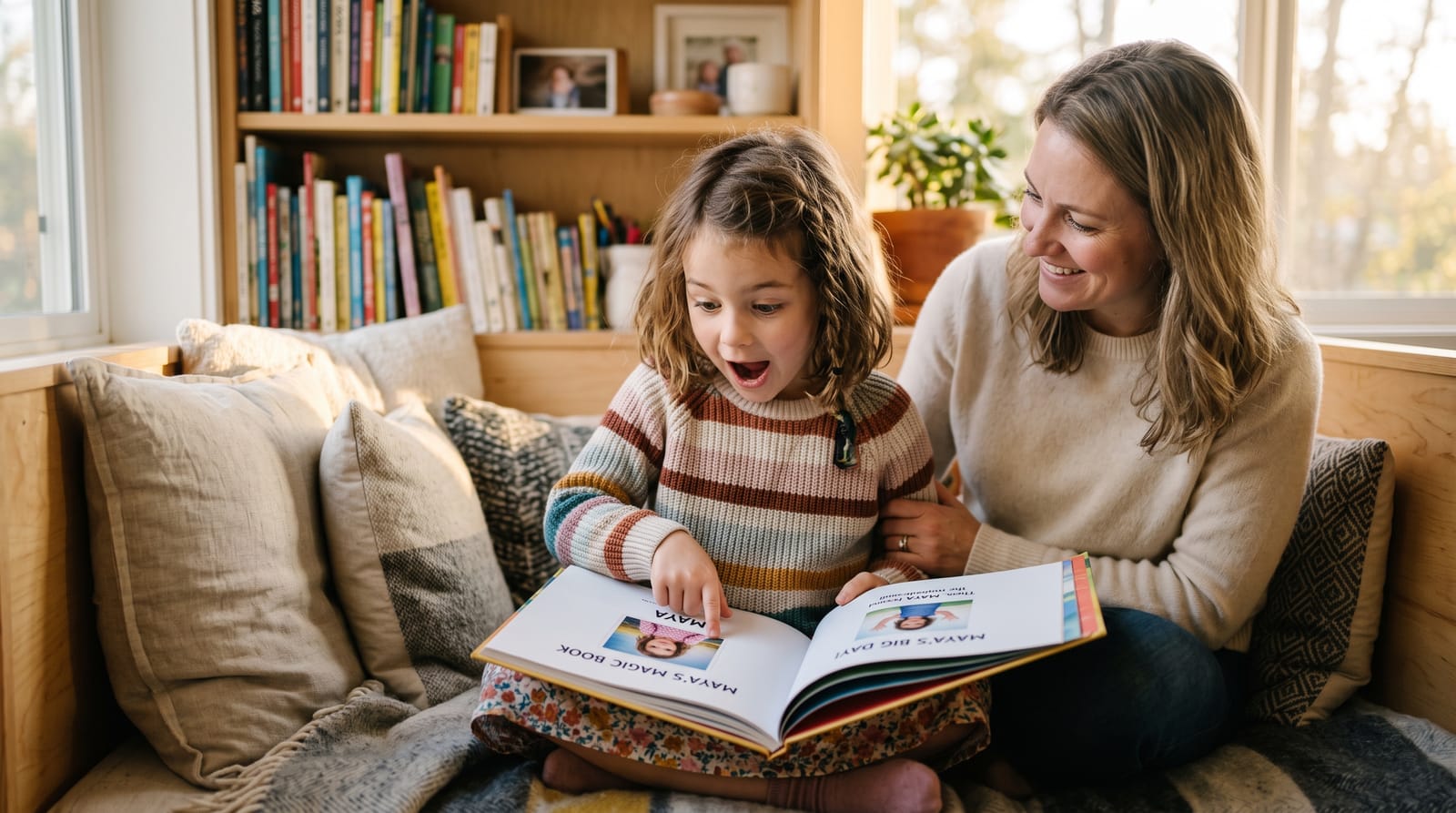
Personalized storytelling, often referred to in clinical settings as "social stories" or "bibliotherapy," allows a child to distance themselves slightly from their fear while still identifying with the protagonist. When you use personalized children's books that feature your child’s uploaded photo and name, the impact is doubled. They aren't just reading about a brave bear or a courageous knight; they are looking at themselves being brave. This builds "self-efficacy," which is a fancy way of saying a child’s belief in their own ability to handle a situation.
When kids with anxiety see their own face on the page of a book, successfully navigating a playground or saying hello to a new friend, their brain begins to register that success as a possibility. It moves the concept of "bravery" from an abstract idea to a concrete reality.
Identifying Your Child’s Specific Anxiety Triggers
Before you can write or choose the right "Brave Story" script, you have to know what you’re fighting. Anxiety isn't a one-size-fits-all experience. Some children struggle with separation, while others are terrified of making a mistake. Identifying the specific "mountain" your child is facing is the first step in creating a script that actually helps.
Common triggers for kids with anxiety include:
- Social Situations: Fearing judgment from peers or not knowing how to start a conversation.
- Separation: Worrying about being away from parents or caregivers, especially at school or bedtime.
- Performance Anxiety: Being afraid to try a new sport, instrument, or academic task because they might "fail."
- Environmental Changes: New homes, new classrooms, or even a change in the daily routine.
- Specific Phobias: Common ones include dogs, loud noises, or the dark.
Once you identify the trigger, you can tailor your "Brave Story" to address it directly. For example, if your child is nervous about a doctor’s visit, the story shouldn't just be about "being brave" in general. It should be about your child walking into the doctor's office, feeling the cold stethoscope, and realizing they are okay.
The Anatomy of a Powerful "Brave Story" Script
A good script for kids with anxiety follows a very specific emotional arc. You don't want to pretend the fear doesn't exist; that feels dishonest to a child who is genuinely scared. Instead, you want to acknowledge the fear and then provide a way through it. Here is the four-step structure we recommend for any personalized script.
1. The Setup: Normalizing the Feeling
Start the story by showing your child in a familiar, comfortable setting. Then, introduce the challenge. Crucially, describe the physical feelings of anxiety. "As [Child's Name] stood in front of the big school doors, their tummy felt like it had jumpy butterflies inside." This tells the child that it’s okay to feel nervous and that you understand what they are going through.
2. The Choice: The Moment of Hesitation
Every hero faces a moment where they want to turn back. In your script, describe your child pausing. This creates a "mirror" for their real-life experience. It validates that bravery isn't the absence of fear; it's doing the thing even when you are scared.
3. The Tool: A Coping Strategy
This is the most important part. Give your child a "superpower" or a tool in the story that they can use in real life. This might be a deep breathing exercise, a "brave word" they whisper to themselves, or a special "invisible string" connecting them to you. By practicing this tool in the story, they are training their brain for the real-life event.
4. The Success: The Victory Lap
End the story with a clear, positive outcome. Show your child smiling, having fun, or feeling proud of themselves. In custom bedtime stories, this is where the AI illustrations really shine. Seeing their own face smiling after a "scary" event provides a powerful visual anchor for success.
Sample "Brave Story" Scripts for Common Scenarios
To help you get started, here are a few scripts you can adapt. Whether you are using an AI story generator for children or writing one yourself, these templates provide a solid foundation.
Scenario 1: The First Day of School (Social/Separation Anxiety)
The Script: "[Name] stood at the edge of the playground. The school looked very big, and there were so many new faces. [Name] felt a little bit small. They took a deep breath (in through the nose, out through the mouth), just like a dragon blowing out a tiny flame. Then, [Name] took one step forward. Then another. They saw a classmate named Leo, who was also looking a little shy. [Name] remembered their brave secret: 'I can do hard things.' They walked up and said, 'Hi, I'm [Name]. Do you want to play?' By lunchtime, [Name] realized that the big school wasn't so scary after all. They were a Playground Hero!"
Scenario 2: Conquering the Dark (General Anxiety/Phobias)
The Script: "When the sun went down and the stars came out, [Name]’s room felt different. The shadows on the wall looked like funny tall giants. But [Name] knew a secret. They had the 'Glow of Courage.' [Name] reached for their favorite stuffed animal and gave it a squeeze. They imagined a bright, golden light surrounding their bed like a protective bubble. [Name] realized the giants were just the shadows of their favorite books. They snuggled deep into the covers, feeling safe and strong. The dark wasn't a place to be scared; it was a place for the best dreams to start."
Scenario 3: Trying a New Sport (Performance Anxiety)
The Script: "[Name] looked at the soccer field. All the other kids seemed to know exactly what to do. [Name] worried they might kick the ball the wrong way. Their heart went thump-thump-thump. But then, [Name] remembered that even the best players started at the beginning. They told their feet, 'Let's just try one kick.' When the whistle blew, [Name] ran fast. They didn't worry about being perfect; they just worried about having fun. Even when they missed the ball once, they just laughed and tried again. [Name] learned that being a hero means trying, even when you're not sure you'll win."
How StorytimeHero.ai Turns These Scripts into Reality
Writing a script is a great first step, but for kids with anxiety, seeing is believing. This is where StorytimeHero.ai changes the game. Our platform doesn't just put your child's name in a story; it uses advanced AI to place your child’s uploaded photo into the illustrations.
Imagine your child, who is terrified of the water, opening a book and seeing a high-quality illustration of themselves wearing a life vest and splashing happily in a pool. This creates a "future memory." The brain has a hard time distinguishing between a vivid visualization and a real experience. When your child sees themselves succeeding on the page, the real-life task feels significantly less daunting.
Using our tool, you can reinforce emotional intelligence for kids by creating stories that specifically target their current hurdles. You can choose themes that match their interests, such as space, dinosaurs, or magic, to make the "brave" message even more engaging.
Practical Tips for Using Brave Stories in Your Daily Routine
A "Brave Story" isn't a one-time fix. It’s a tool that works best with repetition and conversation. Here is how to get the most out of your personalized scripts:
- Read During "Green Zone" Times: Don't wait until your child is in the middle of a meltdown to read the story. Read it when they are calm, happy, and receptive. This allows the message to sink in without the interference of active stress hormones.
- Encourage Interaction: Ask questions while you read. "Look at your face there! You look so brave. How do you think you felt in that moment?" This helps the child internalize the character's courage as their own.
- Use the "Brave Tool" in Real Life: If your story featured a deep breath or a magic word, prompt your child to use it when a real-life challenge arises. "Remember in your book how you used your Dragon Breath? Let's try that now."
- Keep it Positive: Focus more on the feeling of accomplishment than the fear itself. The goal is to make the "victory" the most memorable part of the story.
- Make it a Gift: If you know a big change is coming, such as a move or a new sibling, consider these books as personalized gift ideas for kids. It gives them something to hold onto during the transition.
Helping Kids with Anxiety Navigate Transitions
Transitions are often the hardest times for kids with anxiety. Moving from home to school, from playtime to bedtime, or from one activity to another can trigger a sense of loss of control. Personalized scripts are excellent for "previewing" these transitions.
When you create a story about overcoming first-day jitters, you are essentially giving your child a mental rehearsal. You can include details about their specific teacher’s name, the color of their backpack, and who will be picking them up at the end of the day. This reduces the "unknowns," and for an anxious child, the unknown is usually what they fear most.
By turning the transition into a narrative, you give it a beginning, a middle, and most importantly, a happy end. You are teaching them that while transitions are a part of life, they are also characters who can handle them with grace and courage.
The Science of Bibliotherapy and Visualization
You might wonder if a simple book can really help with something as complex as anxiety. The answer lies in bibliotherapy. This is a creative arts therapy modality that uses the relationship between a person and the content of a book as a medium for healing.
For kids with anxiety, bibliotherapy provides:
- Universalization: Realizing they aren't the only ones who feel this way.
- Identification: Connecting deeply with a character who shares their struggle.
- Catharsis: Releasing pent-up emotions as they follow the story's tension and resolution.
- Insight: Gaining a new perspective on their own fears.
When you add the "personalized" element through StorytimeHero.ai, you are supercharging these effects. You are moving from identification (I am like that character) to identity (I am that character). This is a profound shift for a young mind. It moves the needle from "I'm a kid who is scared" to "I'm a kid who can be brave."
Creating a "Bravery Library"
One story is a great start, but building a "Bravery Library" can provide ongoing support as your child grows. You can create different books for different stages of their development.
- Ages 3-5: Focus on separation, the dark, and sharing.
- Ages 6-8: Focus on school performance, making friends, and trying new hobbies.
- Ages 9+: Focus on social dynamics, academic pressure, and self-esteem.
Each book serves as a milestone. On a particularly hard day, you can pull an old book off the shelf and say, "Remember when you were scared of the dark? Look how brave you were then. You can be brave today, too." This creates a physical history of their courage that they can look back on whenever they need a boost.
Frequently Asked Questions
Free preview checklist
Get the personalized book gift checklist
Know what photo to use, what to write in the dedication, and what to review before ordering.