How Personalized Books Connect Kids to the Universe | StorytimeHero
Start a cover preview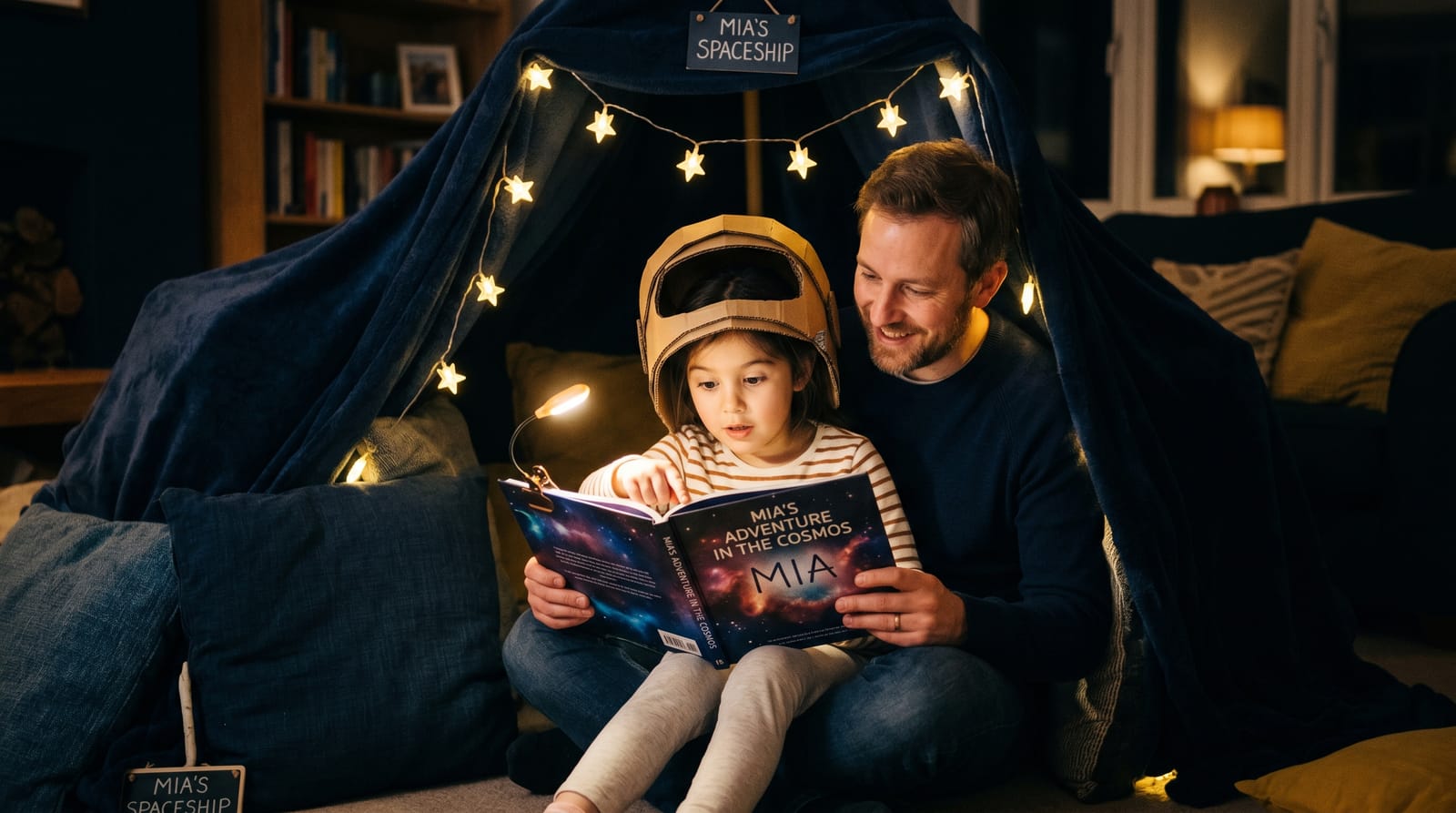
There is a specific kind of hush that falls over a child when they first look through a telescope or see a high-resolution image of a distant nebula. It is a mixture of awe, curiosity, and perhaps a tiny bit of intimidation. The universe is vast, after all, and a child’s world—their "this-world"—is often defined by the familiar: the height of their bed, the smell of breakfast, and the safety of a parent's hand.
As we move further into the {YEAR}s, our collective fascination with the cosmos has found a new spark. With the Artemis missions aiming to put the first woman and person of color on the moon, and private space exploration becoming a regular headline, the "final frontier" feels closer than ever. Yet, for a young reader, there remains a significant gap between the abstract concept of a galaxy and their own tangible identity.
This is where the magic of personalized books comes into play. By weaving a child’s own name, appearance, and personality into stories of interstellar discovery, we do more than just teach them about the planets. We ground the infinite in the intimate, showing them that they don’t just live under the stars—they belong among them.
The Power of the "This-World" Connection
When children engage with stories about space, they are often invited to look away from their immediate surroundings. They are encouraged to imagine "out of this world" scenarios. While this is vital for cognitive development, the most impactful learning happens when a child can connect those grand ideas back to their "this-world" experience.
A personalized narrative serves as a bridge. When a child reads a story where they are the one donning the silver spacesuit or calculating the trajectory to Mars, the science stops being a set of dry facts. It becomes a personal mission. This shift in perspective is crucial because it transforms the child from a passive observer of the universe into an active participant.
In the realm of modern children's literature, there is a growing trend toward Personalization and Modern Picture Book Trends that prioritize this sense of agency. By placing the child at the center of the narrative, we validate their curiosity and give them the confidence to explore complex subjects that might otherwise feel out of reach.
From Stargazing to Science Identity
For many children, the dream of working for NASA or becoming an astronaut starts with a simple night spent stargazing. However, maintaining that dream through the challenges of school and adolescence requires a strong "science identity." This is the internal belief that "I am the kind of person who can do science."
Traditional books often feature heroic figures—astronauts, scientists, and explorers—who are inspiring but distant. They are "other" people. Personalized books disrupt this distance. When a child sees themselves navigating a meteor shower or discovering a new moon, they are practicing that science identity in a safe, imaginative space.
This is particularly important for young girls and children from underrepresented backgrounds. As we see in modern movements to highlight the women who paved the way for modern space travel, representation matters. But what could be more representative than the child themselves? By making the reader the protagonist, we remove the "gatekeeper" aspect of STEM (Science, Technology, Engineering, and Mathematics). In their own "this-world" library, the path to the stars is already open to them.
Competing with the Digital Glow: The "Look Up" Philosophy
One of the greatest challenges for modern parents is the constant pull of the screen. In a world of fast-paced digital distractions, the slow, quiet wonder of the night sky can sometimes struggle to compete. We often see the trope of the sibling more interested in their phone than a passing comet—a scenario that feels all too real for many families.
Personalized books offer a unique solution to this "this-world" dilemma. Because the story is about them, the child’s engagement level is naturally higher. This is known as the protagonist effect, where the personal relevance of the text increases reading motivation and comprehension.
A book that invites a child to "look up" from their daily routine and see themselves as a cosmic voyager creates an immersive experience that a generic app cannot replicate. It turns reading time into a high-stakes adventure where the child’s own identity is the key to unlocking the mysteries of the galaxy. This helps foster a lifelong habit of seeking wonder in the physical world rather than just the digital one.
Emotional Resilience in the Great Unknown
Space is not just a place of wonder; it is also a place of great mystery and the unknown. For a child, the "this-world" equivalent of a black hole might be the first day of school, a move to a new city, or a difficult friendship.
Using space as a backdrop for personalized stories allows parents to discuss themes of courage and resilience. When a child-hero faces a "freakish alien" or a technical glitch on their starship, they are learning how to manage fear and solve problems. By Shaping Modern Childhood through Personalized Narratives, we give children a framework for bravery that they can apply to their everyday lives.
If they can navigate the vacuum of space in their favorite book, they can certainly navigate the playground. The vastness of the universe becomes a metaphor for the vastness of their own potential. It teaches them that while the world (and the universe) is big, they are capable of finding their way through it.
Making the Universe Tangible: Tips for Parents
How can you help your child connect these "out of this world" concepts to their "this-world" reality? Here are a few ways to extend the magic of a personalized story:
- Create a "Mission Control" at Home: After reading a story where your child is the astronaut, set up a small corner of their room with maps of the moon, a flashlight, and a "logbook" where they can draw what they "saw" on their journey.
- Connect Facts to Feelings: When you encounter a space fact—like the fact that there is no sound in space—ask your child how they would feel in that quiet. Would they find it peaceful or spooky? This anchors the scientific fact in their own emotional "this-world" experience.
- Use Role Models as Mentors: Introduce your child to real-life scientists and astronauts who share their interests. When they read their StorytimeHero book, they aren't just a character; they are part of a long lineage of explorers.
- Practice "This-World" Stargazing: You don't need a high-end telescope to appreciate the sky. Simply lying on a blanket in the backyard and identifying one constellation mentioned in their book can solidify the connection between the page and the world.
The Lasting Impact of Personalization
At StorytimeHero, we believe that every child deserves to see themselves as the hero of their own story. Whether that story takes place in a magical forest or on the rings of Saturn, the goal is always the same: to build a sense of belonging and confidence.
When we address the "this-world" needs of a child—their need for representation, their need for engagement, and their need for emotional safety—we create a foundation for lifelong learning. A personalized book about space is more than a gift; it is a declaration that the child’s dreams are valid and that their place in the universe is secure.
By Modernizing the Picture Book Experience, we ensure that the stories we tell today reflect the diverse, ambitious, and curious children who are reading them. We aren't just teaching them to look at the stars; we are teaching them that they are made of the same stardust, capable of reaching heights they haven't even imagined yet.
***
Frequently Asked Questions
Related Reading
Free preview checklist
Get the personalized book gift checklist
Know what photo to use, what to write in the dedication, and what to review before ordering.