Emotional Intelligence: Why Personalized Stories Teach Feelings Faster
Start a cover preview
We’ve all been there—the middle of the grocery store, the "wrong" color plate at dinner, or the frustration of a block tower falling over. These moments are more than just tantrums; they are the early, messy stages of your child learning how to navigate a world full of big feelings. As parents, we want to give our kids the tools to handle these emotions with grace, but teaching emotional intelligence can feel like trying to explain the wind. You know it’s there, you feel it, but how do you show it to a four-year-old? Traditional books are wonderful, but there is a new, faster way to help your child understand their heart. When your child sees their own face in a story—becoming the actual hero of the adventure—the lessons about kindness, bravery, and frustration click into place much faster than they do with a fictional character.
What Exactly is Emotional Intelligence and Why Does It Matter?
Before we dive into how stories help, let’s talk about what we’re actually trying to teach. Emotional intelligence, often called EQ, is the ability to recognize, understand, and manage our own emotions while also recognizing and influencing the emotions of others.
For a child, this looks like:
- Knowing they are feeling "frustrated" instead of just hitting a toy.
- Understanding that a friend might be sad because their snack dropped.
- Learning how to take a deep breath when they feel a "bubble" of anger in their chest.
- Having the confidence to try again after they fail at something new.
Research shows that EQ is actually a better predictor of future success and happiness than IQ. Children with high emotional intelligence tend to do better in school, have healthier friendships, and grow into more resilient adults. But here is the catch: kids are naturally egocentric. This isn't a bad thing; it’s just how their brains develop. They see the world through the lens of "me." This is exactly why personalized children's books are such a powerful tool. They meet the child exactly where they are—at the center of their own universe.
Building Emotional Intelligence Through Personalized Adventures
When you read a standard book about a bear who is sad, your child learns about the bear's sadness. It’s a great lesson in empathy, but there is still a "gap" between the bear and the child. Your child has to translate the bear's experience into their own life.
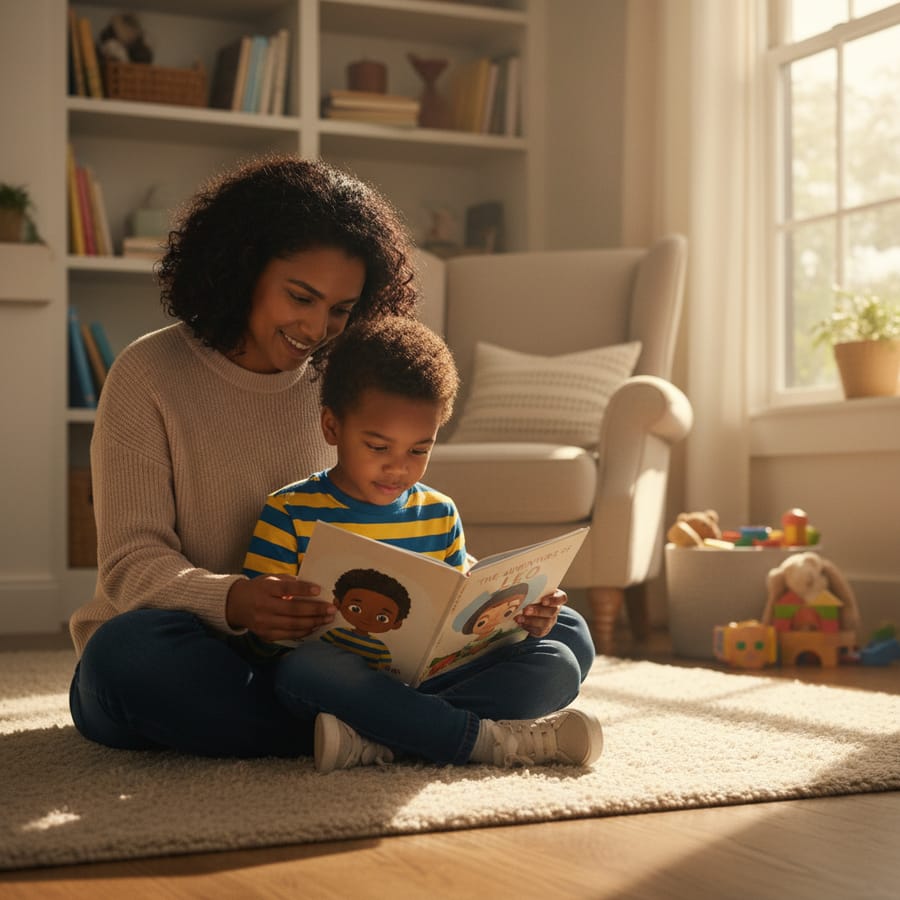
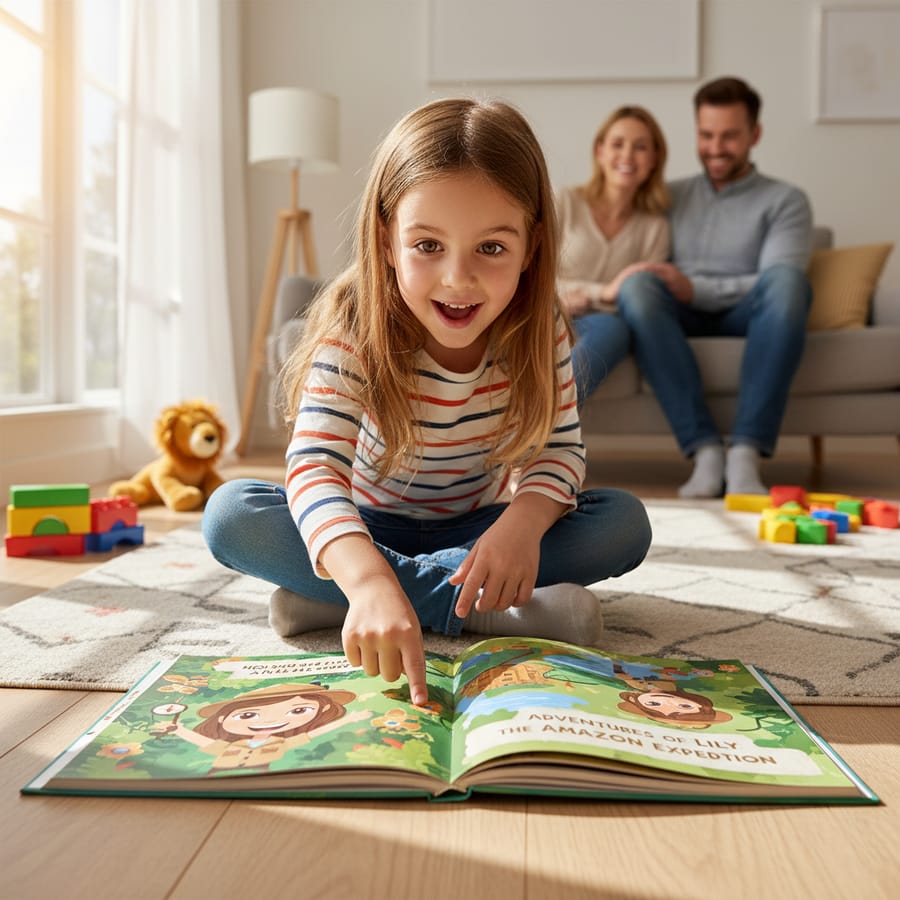
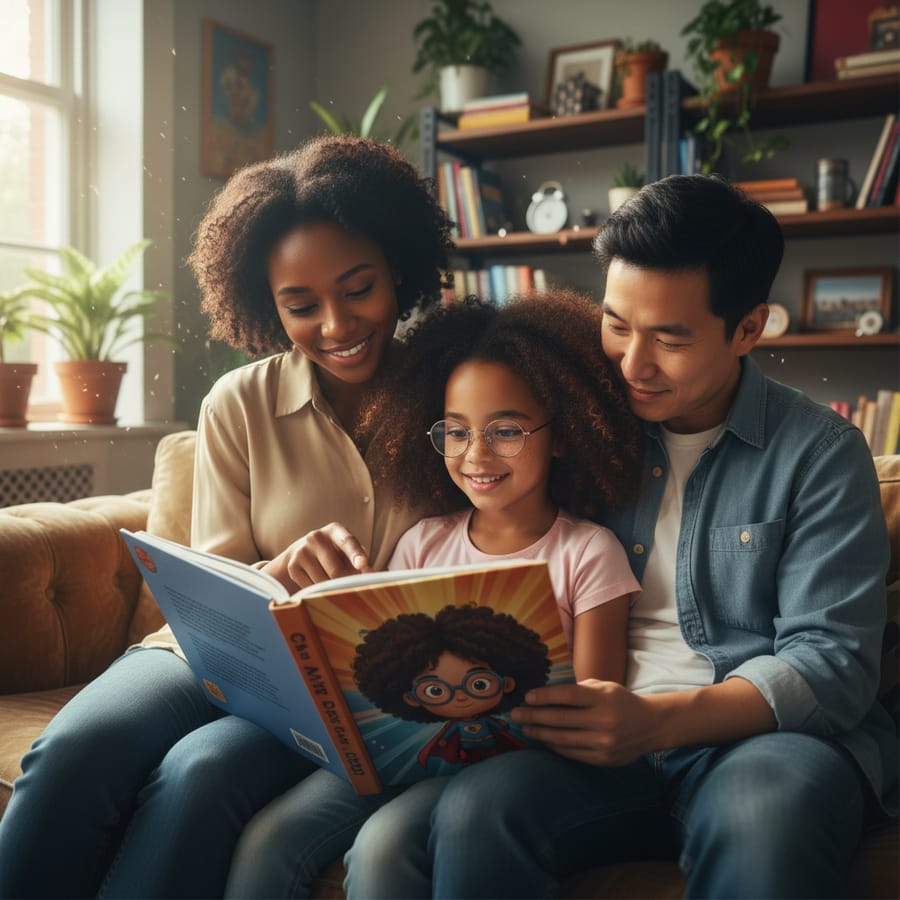
With personalized storybooks, that gap disappears. When the hero of the story has your child’s face, thanks to AI-generated illustrations, the brain processes the information differently. Instead of thinking, "The bear is brave," the child thinks, "I am brave."
The Power of the "Mirror Effect"
Scientists have discovered something called "mirror neurons." These are brain cells that fire both when we perform an action and when we see someone else perform that same action. When a child sees a character who looks exactly like them overcoming a fear of the dark or sharing a toy, those mirror neurons go into overdrive. The brain essentially "practices" the emotion and the resolution. This is why we say personalized stories teach feelings faster—they provide a direct mental blueprint for the child to follow.
Self-Awareness Starts with Self-Recognition
The first step of emotional intelligence is self-awareness. A child needs to recognize themselves as an individual with their own thoughts and feelings. When they see their uploaded photo on the page of a book, it reinforces their sense of self. It says, "You are important. Your story matters. Your feelings are worth writing about." This boost in self-esteem creates a safe foundation for exploring "scarier" emotions like jealousy or fear.
Why Personalized Stories Teach Feelings Faster Than Standard Books
You might wonder, "Does it really make that much of a difference if the character looks like my child?" The answer, according to developmental psychology, is a resounding yes.
- Increased Engagement: A child who sees themselves as the hero is naturally more focused. They aren't just listening to a story; they are living it. Higher engagement leads to better retention of the "moral" or emotional lesson of the story.
- Reduced Cognitive Load: In a traditional story, the child's brain has to work to identify with the character. In a story where kids become the heroes, that work is already done. The brain can use all its energy to focus on the emotional themes of the plot.
- Personal Relevance: If a story is about a boy named Timmy who is afraid of the first day of school, your child might think, "Well, I'm not Timmy." But if the story features their own face and name, the fear—and the solution—becomes personally relevant.
When we talk about building emotional intelligence, we are talking about building a vocabulary for the heart. Personalized stories give children the words to describe what they are seeing in their own "heroic" reflection.
Practical Ways to Use Personalized Books for Emotional Intelligence
Simply reading the book is a great start, but you can maximize the learning by how you interact with the story. Here are some parent-to-parent tips for using these books as a teaching tool:
Pause and Ask "Heart Questions"
As you flip the pages and see your child’s face in a new situation, stop and ask questions that go beyond the plot.
- "You look a little nervous in this picture because of the big dragon. What do you do when you feel nervous in real life?"
- "Look how happy you are to help the forest animals! How does your tummy feel when you are being kind?"
Label the Emotions
Use the book to build their "feeling vocabulary." Instead of just saying "happy" or "sad," use the illustrations to point out nuances. "In this part of the story, you look determined. That means you aren't going to give up, even though it's hard." Because the illustration is of their own face, they can see exactly what "determined" looks like on them.
Role-Play the Resolution
If the story involves a conflict—like sharing a magical sword or waiting for a turn to fly a spaceship—take a moment after the book is closed to role-play. "Remember in your book when you waited for the robot to finish speaking? Let's practice that right now with our toys!"
By using a custom adventure story as a reference, you aren't just lecturing them on behavior; you are reminding them of the hero they already are.
Real-Life Scenarios: Teaching Emotional Intelligence with Your Child’s Face
Let’s look at some specific emotional hurdles where personalized storytelling can make a massive difference.
Overcoming Anxiety and Fear
Many children struggle with "new" things—starting preschool, going to the dentist, or sleeping without a nightlight. A personalized story can act as a "dry run." If your child sees themselves successfully navigating a "Spooky Forest" in their book, they are building a mental image of themselves as someone who is capable of handling fear. This is a core component of emotional intelligence: self-regulation.
Developing Empathy for Others
It sounds counterintuitive, but seeing yourself as the hero can actually make you more empathetic toward others. In a StorytimeHero.ai book, the hero often has to help a sidekick or a creature in need. When your child sees themselves performing an act of kindness, it reinforces their identity as a "helper." They begin to look for opportunities to be that person in the real world.
Managing Frustration and Failure
Every hero’s journey involves a setback. Maybe the hero’s map gets wet, or they lose their way in a maze. Seeing their own face in a moment of "failure" followed by a moment of "trying again" is incredibly powerful. It teaches resilience. It shows them that a mistake isn't the end of the story—it's just the middle of the adventure.
The Role of AI in Making These Lessons Possible
In the past, personalized books were limited. You could change the name, and maybe pick a hair color that vaguely looked like your child. But the emotional connection was often weak because the cartoon didn't truly represent the child.
Today, we use advanced AI to integrate your child's actual likeness into the art. This isn't just a "cool feature." It is the engine that drives the emotional impact. When a child sees their actual eyes, their familiar expression, and their actual expressions on the page, the brain's "empathy center" lights up. This technology allows us to create stories that are as unique as your child’s own personality, making the emotional intelligence guide of the story feel like a personal message rather than a generic lesson.
How to Choose the Right Story for Your Child’s Current "Big Feeling"
Not every child is dealing with the same emotional milestone at the same time. To teach feelings effectively, you want to match the story to their current life experience.
- For the Shy Child: Choose a story where the hero (your child) has to lead a team or speak up to save the day. This builds "social EQ."
- For the High-Energy Child: Look for adventures that require "stealth" or "patience." Seeing themselves being calm and quiet in a story helps them visualize those states in real life.
- For the Child Dealing with Change: Choose stories about travel or moving to new lands. This helps them process the idea that "different" can be an adventure rather than a threat.
Supporting the Journey Beyond the Book
While personalized stories are a "fast track" to teaching feelings, they work best when supported by a home environment that values emotions.
- Validate, Don't Dismiss: When your child is upset, avoid saying "you're fine." Instead, use the language from their books. "It looks like you're having a 'stormy' moment like the hero in our story. It's okay to feel that way."
- Model Your Own EQ: Let your child see you manage your emotions. "I'm feeling a little frustrated because I can't find my keys. I'm going to take a deep breath like we read about in your book."
- Keep the Library Growing: As your child grows, their emotional needs change. A story that helped with "sharing" at age three might need to be replaced by a story about "integrity" or "perseverance" at age six.
By keeping your child at the center of their reading journey, you are giving them more than just a book. You are giving them a mirror that reflects their best, most capable, and most emotionally aware self.
Frequently Asked Questions
Related Reading
- How Personalized Books Boost Early Literacy Skills
- The Science of Storytelling: How Kids Learn Through Narrative
- Tips for Creating a Bedtime Routine That Reduces Anxiety
- Why Representation in Children's Literature Matters More Than You Think
- Using AI to Foster Creativity in the Next Generation
- The Connection Between Self-Esteem and Personalized Learning
- How to Talk to Your Toddler About "Big Feelings"
Free preview checklist
Get the personalized book gift checklist
Know what photo to use, what to write in the dedication, and what to review before ordering.