Benefits of Personalized Reading: Literacy, Psychology & Child Development
Start a cover preview
Meta Title: Benefits of Personalized Books for Kids: What Research Shows
Meta Description: Discover the science behind personalized children's books. Research shows custom stories boost literacy, confidence, and emotional development.
Slug: benefits-of-personalized-reading
Primary Keyword: benefits of personalized books
Secondary Keywords: why personalized books work, literacy development, child psychology reading
Category: pillar-developmental-benefits
pillarPage: true
Target Word Count: 2800 words
Every parent wants to give their child an edge. We obsess over the right schools, the best extracurriculars, the most nutritious snacks. But what if one of the most powerful developmental tools was something as simple as a book, with your child as the hero?
Personalized children's books aren't just a novelty gift that makes kids smile (though they absolutely do that). Decades of research in cognitive psychology, literacy development, and child psychology point to something remarkable: when children see themselves in stories, something fundamental shifts in how they engage, learn, and grow.
This guide dives deep into the science. We'll explore why personalization works, what it does for literacy and emotional development, how it specifically benefits neurodivergent children, and practical ways to maximize these benefits at every age. Whether you're a parent, educator, or simply someone who loves giving meaningful personalized gifts for kids, understanding the "why" behind personalized reading will change how you think about children's books forever.
The Science of Self-Reference: Why We Remember What's About Us
Here's a question psychologists have been studying for decades: Why do we remember our own birthday better than a random date? Why can we recall details about our first apartment but forget what we had for lunch yesterday?
The answer lies in what researchers call the "self-reference effect", a well-documented phenomenon showing that information processed in relation to the self is remembered significantly better than information processed in other ways.
How the Self-Reference Effect Works
In classic studies dating back to Rogers, Kuiper, and Kirker's 1977 research, participants who were asked "Does this word describe you?" remembered far more words than those simply asked "Is this word printed in uppercase?" The brain treats self-relevant information as more important, encoding it more deeply into long-term memory.
For children, this effect is even more pronounced. Their developing brains are actively constructing a sense of self, making self-relevant information especially magnetic. When a child sees their name, their face, their specific characteristics in a story, their brain essentially flags every piece of information as "important, this is about ME."
This is why the psychology behind personalized gifts runs so deep. It's not just emotional preference, it's neurological privilege. The brain literally processes personalized content differently.
From Theory to Practice
What does this mean for personalized storybooks? Consider the difference:
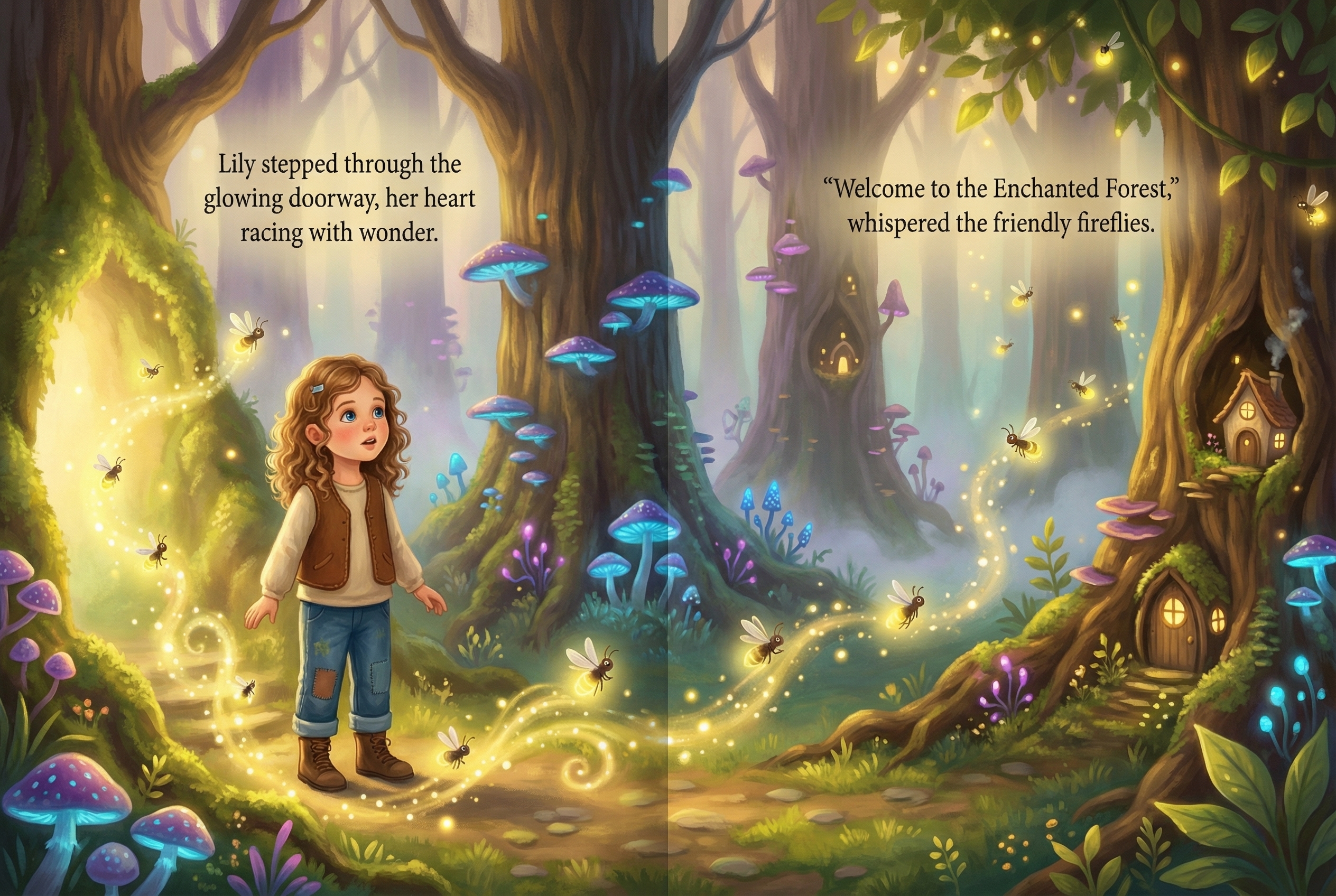
Generic book: "The brave adventurer walked into the enchanted forest."
Personalized book: "Brave Emma walked into the enchanted forest, her curly brown hair catching the sunlight."
In the second version, Emma's brain activates self-referential processing. Every detail becomes more vivid. Every lesson more memorable. Every emotion more deeply felt.
Research suggests children engage approximately 40% more with personalized reading material, but the real magic isn't just engagement. It's what happens during that engaged state: deeper comprehension, stronger vocabulary retention, and more meaningful emotional connections to the story's themes.
Literacy and Reading Development: Beyond Just Getting Kids to Read
One of the most significant benefits of personalized books shows up in measurable literacy outcomes. For parents of reluctant readers, this section might just change everything.
The Engagement Advantage
The first step to literacy is simple: kids need to actually read. But getting a child to sit down with a book, especially in an age of screens and instant gratification, can feel like negotiating a peace treaty.
Personalized books solve this problem elegantly. When children see themselves on the cover, when their name appears on every page, when the hero looks just like them, the book transforms from "homework" to "treasure."
Studies on personalized reading materials consistently show:
- Increased time spent reading per session
- Higher rates of repeated reading (children return to personalized books more often)
- Greater willingness to read independently
- More positive associations with reading as an activity
For struggling readers, this shift from obligation to excitement can be transformative. Our detailed look at how personalized books boost literacy explores specific case studies of reluctant readers who discovered a love of books through personalization.
Vocabulary Acquisition and Retention
Here's where the self-reference effect really shines. When children encounter new vocabulary in a personalized context, they retain it better. The word isn't just floating in abstract space, it's connected to a story about them, making it meaningful and memorable.
Consider a child learning the word "courageous." In a generic story, they might understand the definition. But in a story where THEY are described as courageous for facing a dragon, the word becomes part of their self-concept. They don't just know what courageous means, they ARE courageous.
This emotional-cognitive connection supercharges vocabulary development in ways that flashcards and definitions simply can't match.
Reading Comprehension and Story Structure
Comprehension requires more than just decoding words, it requires understanding how stories work. Personalized books teach story structure (beginning, middle, end. conflict and resolution. character development) through the most engaging lens possible: the child's own narrative.
When children understand that stories have heroes who face challenges and overcome them, and when they've experienced being that hero repeatedly, they develop stronger comprehension skills for ALL stories they encounter.
Emotional and Social Development: Building Hearts, Not Just Minds
The benefits of personalized reading extend far beyond academic metrics. Perhaps even more importantly, these books shape how children feel about themselves and relate to others.
Self-Esteem and Identity Formation
Children's literature researchers talk about "mirrors" and "windows" in books. Mirrors are stories where children see themselves reflected. windows are stories that show them different worlds and perspectives.
For many children, especially those from underrepresented backgrounds, finding mirrors in traditional literature is challenging. But personalized books guarantee a perfect mirror. Every child can see themselves as the hero, regardless of their appearance, family structure, or circumstances.
This matters profoundly for identity development. When children repeatedly experience stories where someone who looks exactly like them is brave, kind, clever, and celebrated, these qualities become part of their self-concept. They internalize the message: "I am the hero."
Our guide on building child confidence through personalized stories dives deeper into how parents can reinforce these positive messages through interactive reading.
Emotional Vocabulary and Regulation
Personalized stories provide a safe space for children to explore emotions. When the story describes how the hero (the child) felt scared but found courage, or felt sad but found comfort, children learn emotional vocabulary and regulation strategies through their own narrative.
This bibliotherapeutic effect, using books to help process emotions, is particularly powerful when the child is the protagonist. The emotional distance of "a character in a book" combines with the personal relevance of "but it's ME," creating an ideal zone for emotional learning.
Attachment to Reading and Books
Perhaps one of the most underrated benefits is simple: personalized books create a positive emotional association with reading itself. When a child's earliest book memories include treasured personalized stories, reading becomes linked with love, celebration, and self-worth.
This attachment to books as objects of meaning, not just information delivery systems, builds lifelong readers. The child who slept with their personalized storybook under their pillow is more likely to become an adult who considers books precious.
Benefits for Neurodivergent Children: Personalization as Inclusion
For children with autism, ADHD, and other neurological differences, personalized books offer unique benefits that generic literature simply cannot match.
Why Personalization Especially Helps
Neurodivergent children often struggle with traditional books for various reasons: difficulty maintaining attention through lengthy text, challenges with abstract thinking, trouble relating to characters whose experiences don't match their own, or sensory issues with certain book formats.
Personalized books address several of these challenges simultaneously:
For children with ADHD:
- The constant self-reference maintains attention
- Seeing their face throughout provides visual anchors
- The emotional investment increases focus duration
For children on the autism spectrum:
- Clear, explicit connection between self and character (no abstract relating required)
- Can be customized to reflect their specific interests and experiences
- Potential for social story integration
Our comprehensive guide on personalized books for autism and ADHD explores specific strategies for using these books therapeutically.
Social Stories and Custom Scenarios
Social stories, short narratives that describe social situations and appropriate responses, are a well-established intervention for children with autism. Personalized books can incorporate social story elements, allowing children to rehearse scenarios like starting school, visiting the doctor, or making friends through their own narrative.
When the social story stars the child themselves, the learning becomes more concrete and applicable. The child isn't learning what "a child" should do, they're learning what THEY will do.
Sensory Considerations
StorytimeHero's premium hardcover format addresses sensory preferences many neurodivergent children have. The sturdy pages are tear-resistant, the matte finish reduces glare, and the lay-flat binding allows for comfortable viewing without fighting to keep pages open. These details matter when sensory sensitivities can make or break a reading experience.
Expert Perspectives: What the Research Community Says
Child development experts across disciplines recognize the value of personalized reading, though they approach it from different angles.
Child Psychologists on Self-Concept
Developmental psychologists emphasize how children ages 3-7 are actively constructing their self-concept. During this critical period, the narratives children absorb about themselves shape their core beliefs about who they are and what they're capable of.
Dr. Carol Dweck's research on growth mindset aligns closely with personalized storybook benefits. When children experience stories where they (the hero) overcome challenges through effort and persistence, they develop the belief that abilities are malleable, a cornerstone of growth mindset.
Literacy Specialists on Engagement
Reading specialists consistently identify engagement as the single biggest predictor of literacy development. It's not about the "right" reading program or the perfect curriculum, it's about getting children to read, repeatedly, with pleasure.
Personalized books represent one of the most reliable engagement tools available, particularly for reluctant or struggling readers who have developed negative associations with reading.
Teachers on Classroom Applications
Educators increasingly recognize personalized books as tools for social-emotional learning. Class sets of personalized books, where each child sees themselves in their own copy, create powerful shared experiences while maintaining individual relevance.
Teachers also report that children who have personalized books at home show greater enthusiasm for reading activities at school, suggesting a spillover effect from home literacy experiences.
Age-Specific Benefits: From Infancy Through Childhood
The benefits of personalized reading manifest differently at each developmental stage. Here's what to expect and how to maximize impact at every age.
Infants (0-12 months): Visual Recognition and Bonding
Even before babies understand language, they benefit from personalized books. Infants are hardwired to attend to faces, and seeing their own image creates visual fascination. Board book versions of personalized stories become beloved objects for grasping, chewing, and early "reading" behaviors.
At this stage, the primary benefit is bonding. When parents read personalized books aloud, babies associate the warm experience of being held and hearing a soothing voice with their own image, a powerful foundation for positive self-regard.
Toddlers (1-3 years): Name Recognition and Vocabulary Explosion
Toddlers are learning that they are separate individuals with their own name, a profound developmental leap. Personalized books reinforce this emerging self-concept. Hearing their name repeatedly in story context helps with name recognition while the rich vocabulary of quality children's literature feeds the vocabulary explosion typical of this age.
Personalized first birthday books make particularly meaningful gifts at this stage, becoming treasured items children request for years.
Preschoolers (3-5 years): Self-Concept and Story Comprehension
This is the golden age for personalized books. Preschoolers have enough self-awareness to fully appreciate seeing themselves in stories, while their developing narrative skills make story comprehension increasingly sophisticated.
Children at this age begin to understand that stories have beginnings, middles, and ends, and experiencing themselves as the hero who undergoes this journey strengthens both story comprehension and self-concept simultaneously.
Early Readers (5-7 years): Reading Confidence and Independence
As children transition to independent reading, confidence is everything. A child who has repeatedly experienced themselves as a successful, celebrated hero is more likely to approach reading challenges with a growth mindset.
Personalized books at this level can include slightly more complex vocabulary and longer narratives, meeting children at their growing edge while maintaining the engagement boost of personalization.
Older Children (7+ years): Identity Exploration and Values
By this age, children are developing more sophisticated self-concepts and beginning to grapple with questions of identity, values, and their place in the world. Personalized books can explore themes like bravery, kindness, environmental stewardship, or diversity, allowing children to see themselves embodying valued qualities.
While older children may feel they've "outgrown" some picture books, personalized versions often maintain their appeal, becoming treasured keepsakes that children revisit with nostalgia.
How to Maximize the Benefits: Interactive Reading Strategies
Having a personalized book is just the beginning. How you read it together determines how deeply the benefits take root.
Make It Interactive
Pause during reading to ask questions that deepen self-reference:
- "Look at brave [child's name] facing that dragon. Have you ever felt scared but did something brave anyway?"
- "The story says [child's name] was kind to their new friend. Tell me about a time you were kind to someone."
- "What do you think [child's name] should do next? What would you do?"
These questions transform passive listening into active self-reflection, multiplying the self-reference benefits.
Connect to Real Life
After reading, help children connect story themes to their lived experience:
- "Remember when [child's name] in the story helped the lost unicorn? That's like when you helped Grandma find her glasses."
- "You were just as brave as [child's name] when you tried swimming without floaties."
These connections reinforce that the positive qualities in the story belong to the child in real life, not just in fiction.
Read Repeatedly (Yes, Again)
Children naturally want to read beloved books repeatedly, and personalized books especially inspire re-reading. Embrace this. Each reading reinforces the positive messages, deepens vocabulary retention, and strengthens the emotional bond between child and book.
Research suggests that re-reading familiar books may actually be more beneficial for vocabulary development than constantly introducing new books, as children notice new details with each reading.
Create Reading Rituals
Incorporate personalized books into consistent rituals: bedtime reading, Sunday morning stories, or special occasion re-readings. These rituals create additional positive associations with both the book and reading itself.
For working parents seeking quality bonding time, a nightly personalized book ritual can become a protected moment of connection that both parent and child treasure.
The Long-Term View: Books That Become Keepsakes
Unlike many childhood possessions that end up donated or discarded, personalized books tend to become cherished keepsakes. Parents report finding their adult children still holding onto their personalized storybooks, and grandparents treasure books that feature grandchildren.
This longevity matters. The benefits of personalized reading don't end when the book is finished, they extend through years of re-reading, nostalgic revisiting, and eventually, perhaps, reading to the next generation.
Grandparents who give personalized books often find these become the most treasured gifts they've ever given, outlasting toys and clothes by decades.
Conclusion: The Hero They Already Are
The research is clear: personalized reading offers measurable benefits for literacy, emotional development, confidence, and cognitive processing. The self-reference effect isn't just interesting psychology, it's a practical tool for raising engaged readers and confident children.
But perhaps the deepest truth about personalized books isn't captured in any study. It's this: every child IS already the hero of their own story. Personalized books simply make that visible.
When children see themselves navigating challenges, helping others, and saving the day, they're not learning to be heroes. They're recognizing the hero they already are.
Ready to help your child see themselves as the hero? Create your personalized storybook in just five minutes. Upload a photo, choose an adventure, and watch the magic happen.
Free preview checklist
Get the personalized book gift checklist
Know what photo to use, what to write in the dedication, and what to review before ordering.