The Psychology of Keepsakes: Why Parents Save Custom Gifts
Start a cover preview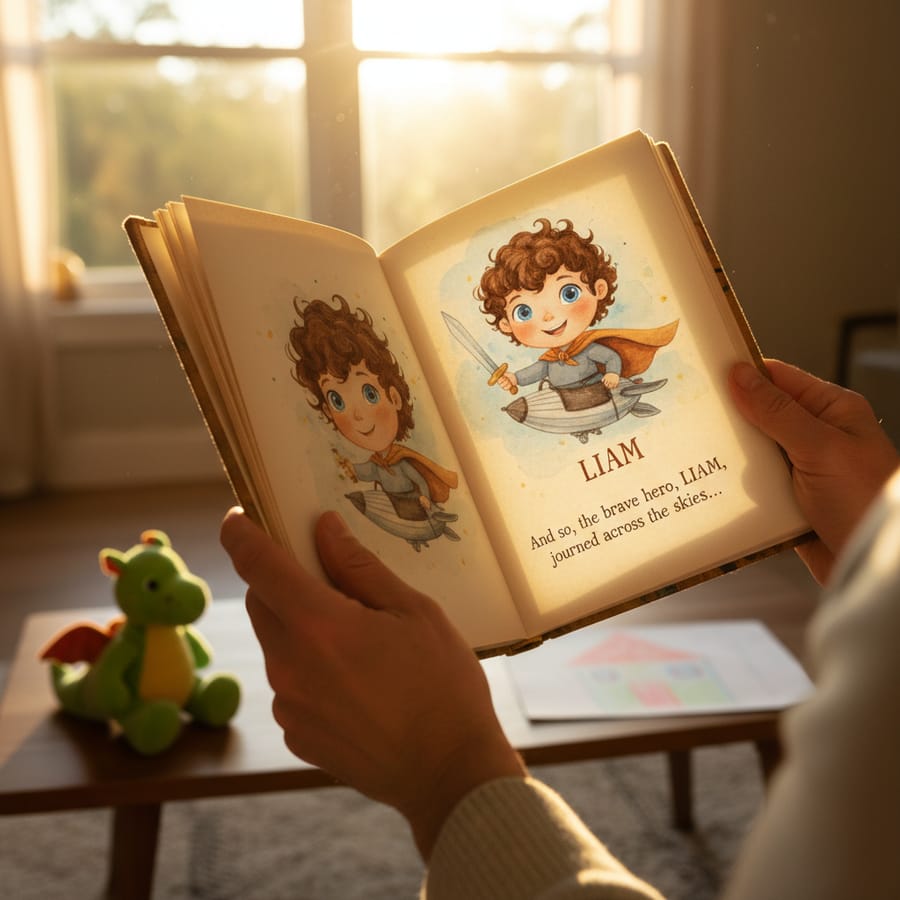
Have you ever found yourself standing in the middle of a cluttered nursery, holding a tiny, mismatched sock or a tattered drawing, and feeling a sudden lump in your throat? You know that logically, it’s just fabric or paper. Yet, you can’t bring yourself to throw it away. As parents, we are the unofficial curators of our children’s lives. We fill boxes with first shoes, lockets of hair, and special birthday cards because these items aren't just "stuff"; they are anchors to memories. This emotional pull is even stronger when it comes to custom gifts. Whether it’s a blanket embroidered with a birth date or one of our personalized storybooks (where your child is the star), these items hold a unique psychological power that generic toys simply can’t match.
The Emotional Connection Behind Custom Gifts
There is a deep psychological reason why we feel so attached to items made specifically for our families. In psychology, this is often linked to the "Endowment Effect." This theory suggests that we value things more simply because we own them. However, when you add personalization into the mix, that value triples. Custom gifts act as a physical bridge between a fleeting moment and a permanent memory.
When you buy a standard toy from a big-box store, it’s a commodity. Thousands of other children have that exact same plastic truck. But when you give your child a gift that features their name, their birthday, or even their own face, it becomes a "singular object." It is one-of-a-kind. For parents, saving these items is a way of "freezing" a stage of their child's development. You aren't just saving a book; you are saving the version of your child that existed the day they first opened it.
This is why customized children's books are rarely found in garage sales; they are deeply personal. They represent the love and thought you put into choosing something special. Every time you see that item on a shelf, it triggers a "flashbulb memory" (a vivid, emotional snapshot of the time your child was that small, that curious, and that excited).
How Custom Gifts Build a Child's Identity
From a child’s perspective, receiving a personalized item is a massive boost to their developing sense of self. Between the ages of two and seven, children are in a stage of "egocentrism," which doesn't mean they are selfish; it just means they are learning how they fit into the world. Seeing their name or their face in a story helps them understand their own identity.
When a child sees themselves as the hero of an adventure in one of our AI-generated storybooks, something magical happens. This is known as the "Self-Referential Effect." We all remember information better when it relates to us personally. For a child, being the protagonist of a book makes the lessons in that book stick. If the character in the book is brave, and that character looks exactly like them, the child begins to believe, "I am brave, too."
Custom gifts like these do more than just entertain; they build a foundation of self-esteem. They tell the child, "You are important enough to have a story written about you." This is a powerful message that resonates long after the bedtime story is over. It’s no wonder parents want to keep these books forever; they are the first chapters of their child's life story.
Why Custom Gifts Outlast Plastic Toys
Think back to the last holiday season. How many of those generic plastic toys are already broken or forgotten at the bottom of the toy box? Most modern toys are designed for "high-intensity, low-duration" play. They are exciting for twenty minutes, but they don't grow with the child.
Custom gifts, on the other hand, are designed for "low-intensity, high-duration" value. A personalized book might be read every night for a year, then tucked away on a high shelf, only to be pulled down a decade later when that child is graduating high school. The psychological "stickiness" of these items comes from the narrative attached to them.
- The Narrative Factor: Every keepsake tells a story. A generic doll is just a doll. A doll that looks like your daughter and wears a dress made from her old baby clothes is a story about her heritage.
- The Quality of Effort: Parents recognize the effort it takes to create something custom. Whether it’s uploading photos for a personalized adventure or choosing specific character traits, that effort translates into perceived value.
- The Multi-Generational Appeal: We save these items because we imagine showing them to our grandchildren. We are essentially building a family museum.
By choosing gifts for toddlers that are personalized, you are making an investment in a family heirloom rather than a temporary distraction.
The Science of "Object Permanence" and Emotional Anchors
As adults, our brains are wired to use physical objects as "retrieval cues" for memories. If you think about your childhood home, you might have a vague memory of the kitchen. But if you hold the specific wooden spoon your grandmother used to stir Sunday sauce, the memories come flooding back in high definition. You can smell the sauce; you can hear her voice.
This is the science of emotional anchors. Custom gifts serve as the most potent anchors because they are so specific. A book that features your child’s uploaded photo (created with our unique AI technology) captures a specific "era" of their childhood. It captures the way their hair curled at age three, or the way they lost their front teeth at age six.
When parents save these items, they are actually protecting their own future memories. We know that time moves too fast. We know that one day, the house will be quiet. Keeping a personalized storybook is a way to ensure that when we are older, we have a "key" to unlock the feelings of these busy, messy, beautiful years of early parenthood.
Strengthening the Parent-Child Bond Through Shared Stories
The act of giving a gift is a "prosocial" behavior that strengthens bonds. When a parent gives a child a custom gift, it’s a signal of deep attunement. It says, "I see you. I know what you like. I know who you are."
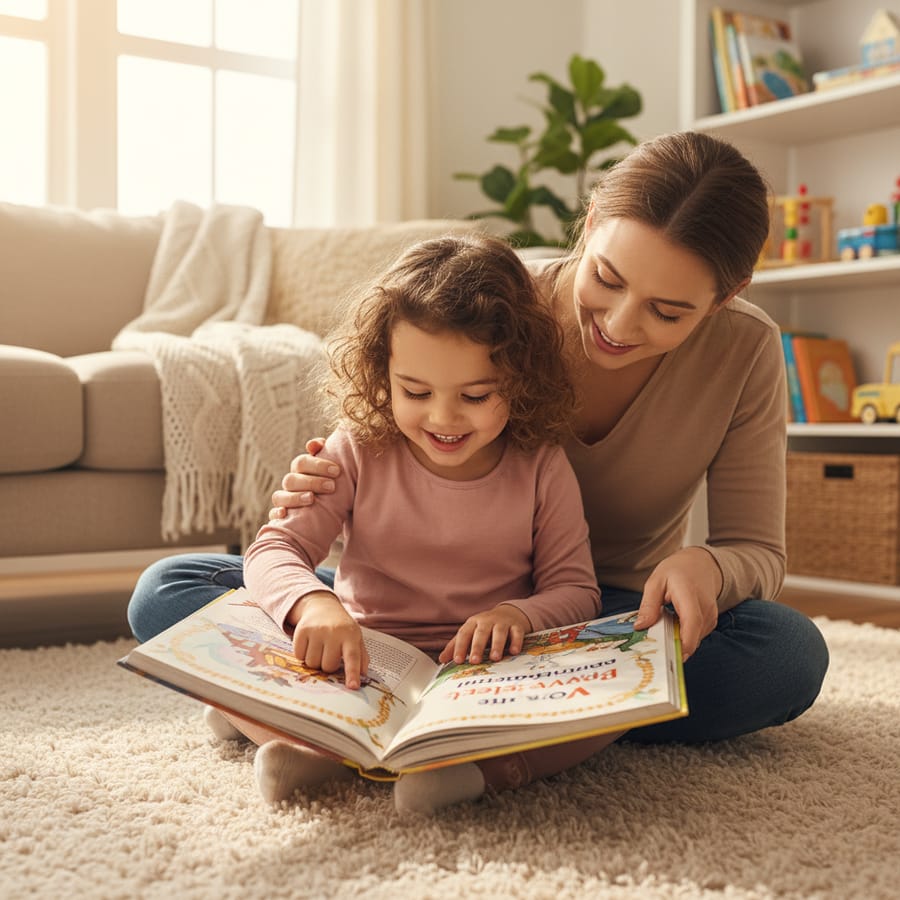
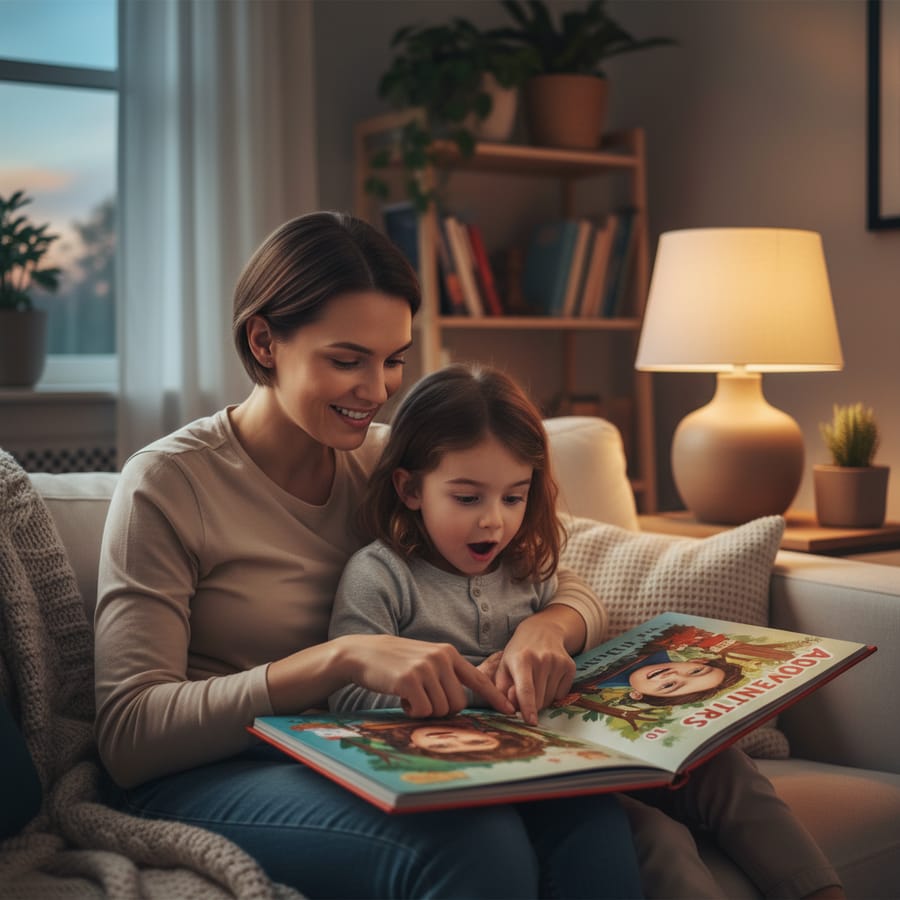
In our bedtime stories, this bond is strengthened through the ritual of reading together. When you sit down with your child and open a book where they are the hero, you aren't just reading a plot; you are sharing an experience.
Psychologists call this "Joint Attention." It is a crucial part of language development and emotional bonding. When both parent and child are focused on the same thing, especially when that "thing" is a version of the child themselves, the neurological connection between the two is heightened. The child feels seen and loved, and the parent feels the joy of providing a magical experience. This shared joy is what makes the book a keepsake. It’s not just the paper and ink; it’s the memory of the cuddles on the sofa, and the "Read it again, Mommy!" requests.
Creating a "Legacy of Literacy" with Personalized Books
One of the most practical reasons parents save custom gifts like books is the long-term impact on literacy. Studies have shown that children are more likely to engage with reading when the material is relevant to their lives. A child who owns a library of books where they are the main character is more likely to develop a positive relationship with reading.
Saving these books creates a "Legacy of Literacy" within the home. As the child grows, these books serve as milestones of their progress. They might start by just looking at the pictures of their own face, then move to recognizing their name, and eventually reading the entire story to you.
When you keep these books in a "memory box" or on a special shelf, you are telling your child that their education and their stories are worth preserving. It sets a standard for how they value their own history and their own growth. This is a gift that keeps giving long after they’ve outgrown the reading level of the book itself.
Practical Tips for Choosing and Preserving Custom Gifts
If you want to start a collection of keepsakes that your child will truly value one day, here are some actionable tips to keep in mind:
- Focus on "The Face": While names are great, visual personalization is much more powerful for younger children. Our AI-generated illustrations allow children to see themselves in high-quality, cinematic art, which makes the book feel much more "real" and worth saving.
- Choose Durable Materials: If you want a gift to be a keepsake, it needs to survive the toddler years. Look for high-quality paper, hardcovers, and sturdy construction.
- Add a Personal Inscription: Always write a note on the inside cover. Mention the date, the occasion, and something your child was obsessed with at that moment (like dinosaurs or "the color blue"). This adds a layer of historical context that makes the item even more precious 20 years from now.
- Rotate Your Keepsakes: You don't have to keep everything on display. Keep a "Current Favorites" shelf and a "Memory Box" for items they have outgrown. This prevents the "clutter overwhelm" that leads to parents accidentally throwing away things they meant to keep.
- Digital vs. Physical: While digital photos are great, they are easily lost in the cloud. A physical, printed book is a tangible object that a child can hold, smell, and touch. Physicality is a key component of what makes something a "keepsake."
By following these steps, you ensure that the custom gifts you buy today remain treasures for a lifetime. You can learn more about how to create these lasting memories by visiting our Pillar Hub.
Frequently Asked Questions
Free preview checklist
Get the personalized book gift checklist
Know what photo to use, what to write in the dedication, and what to review before ordering.