Bedtime Battles: Using Stories to Reduce Resistance
Start a cover preview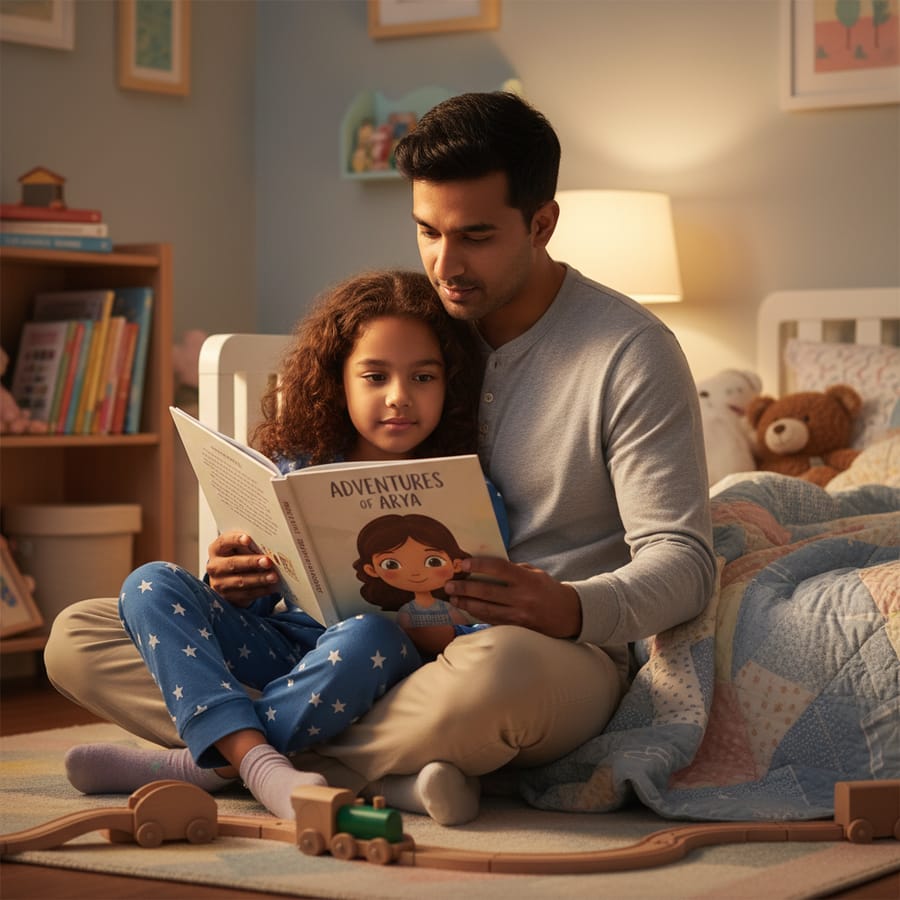
You know the feeling all too well. It’s 7:30 PM, and the house should be winding down. Instead, your living room feels like a high-stakes negotiation room. Your toddler is suddenly a world-class lawyer, arguing why they need "just one more" glass of water, while your preschooler has developed a sudden, urgent interest in the biological lifecycle of ants. These bedtime battles can leave you feeling drained, frustrated, and wondering where you went wrong. But here is a secret: your child isn't trying to be difficult. They are simply navigating a big transition, and they need a little help finding their way to sleep. One of the most powerful tools in your parenting toolkit to end these nightly struggles is the magic of personalized storytelling.
Why Bedtime Battles Happen (And Why They Matter)
To win the war against bedtime resistance, we first have to understand why our kids fight it so hard. For a child, bedtime represents a massive transition. It is the end of play, the end of connection with you, and the beginning of "the great unknown" of sleep.
Most bedtime battles stem from two main things: a desire for autonomy and a fear of missing out (FOMO). When you tell a child "It’s time for bed," you are making a decision for them. For a child who is just learning they are an independent person, their natural reaction is to push back. They want to show you that they have a say in their own life.
Additionally, children are naturally curious. They worry that once they close their eyes, the "real" fun starts. They imagine you and the rest of the family having a party without them. By resisting sleep, they are trying to stay connected to the action. Understanding this helps us move from a place of frustration to a place of empathy. When we use personalized children's books to bridge this gap, we turn a moment of conflict into a moment of deep connection.
The Science of Storytelling and Sleep
Have you ever wondered why we read to children at night? It isn't just a tradition; there is actual science behind it. When you sit down to read a story, your child’s body undergoes a physiological shift.
First, the physical closeness of sitting together releases oxytocin, often called the "cuddle hormone." This lowers cortisol levels, the hormone responsible for stress and alertness. As cortisol levels drop, your child’s nervous system begins to calm down.
Second, storytelling engages the imagination in a way that screens do not. While a tablet or TV provides "passive" entertainment that can overstimulate the brain with blue light and rapid movement, a book requires "active" imagination. Your child has to visualize the scenes, which prepares the brain for the dreaming state. By incorporating personalized bedtime stories into your night, you aren't just killing time; you are literally rewiring your child's brain for rest.
Turning the Tide: How Personalized Stories Stop Bedtime Battles
Standard books are great, but there is something truly transformative about a story where your child is the hero. This is where StorytimeHero.ai changes the game. When a child sees their own face in the illustrations (thanks to our advanced AI technology), their engagement levels skyrocket.
In the context of bedtime battles, personalization serves a very specific purpose: it creates a "Self-Referencing Effect." This is a psychological phenomenon where people remember and relate to information more deeply when it is about them.
Imagine a story where the hero (who looks exactly like your child) goes through a fun adventure but eventually starts to feel their eyes getting heavy. They realize that to have another adventure tomorrow, they need to rest their "hero muscles" tonight. When your child sees themselves doing this on the page, the idea of going to sleep becomes a heroic act rather than a punishment. It shifts the narrative from "I have to go to bed" to "The hero is resting for tomorrow’s mission."
Creating a Bedtime Routine That Actually Works
Consistency is the enemy of bedtime battles. Children crave predictability because it makes them feel safe. If every night is a different struggle, they stay in a state of high alert. A solid routine acts as a series of "cues" that tell the brain it’s time to shut down.
A successful routine should follow a predictable "downward" slope of energy. Here is a sample 30-minute wind-down:
- The Physical Transition (10 minutes): This includes the bath, putting on pajamas, and brushing teeth. Keep the lighting low and your voice quiet during this phase.
- The Connection Phase (15 minutes): This is the heart of the routine. Sit together in a comfy chair or on the bed. This is the time for your personalized storybook. Because the book features your child's uploaded photo, they are likely to be more focused and less likely to wiggle away.
- The Final Tuck-In (5 minutes): A quick recap of the best part of the day, a kiss, and lights out.
By the time you reach step three, the story has already done the heavy lifting of calming their mind and satisfying their need for attention.
Addressing Bedtime Resistance Through Character-Led Learning
One of the hardest parts of bedtime battles is the power struggle. When you say "No more toys," it’s a command. But when a character in a book (especially one that looks like your child) decides to put their toys away to prepare for a dreamland journey, it’s a choice.
Personalized stories allow you to model the exact behavior you want to see. You can create a story where the hero brushes their teeth with a smile or braves the "shadow monsters" by turning on a small nightlight. When your child sees their "book self" being brave and cooperative, they want to match that identity in real life.
This is much more effective than lecturing. Instead of saying, "Stop crying and go to sleep," you can say, "Remember how Hero [Child's Name] felt in our story? They knew that sleep gives them superpowers for tomorrow!" This aligns you and your child on the same team, rather than being opponents in a nightly tug-of-war.
Practical Tips to End Bedtime Battles for Good
While stories are your secret weapon, a few extra strategies can help ensure the peace lasts all night long.
- Offer "False" Choices: Give your child a sense of control without letting them skip the essentials. Instead of asking "Are you ready for bed?", ask "Do you want to wear the blue pajamas or the striped ones?" or "Should we read your custom story first or do your puzzle first?"
- The "Check-In" Method: If your child is anxious about you leaving, tell them, "I’m going to go fold one shirt, and then I’ll come back and check on you in five minutes." This reduces separation anxiety because they know you are still there.
- Use Visual Timers: Sometimes kids don't understand how long "five more minutes" is. A visual timer (like a sand timer or a digital clock) helps them see the transition coming so it isn't a surprise.
- Optimize the Environment: Ensure the room is cool, dark, and quiet. A white noise machine can help block out those "FOMO" sounds from the rest of the house.
- Acknowledge Their Feelings: If they say "I'm not tired," try saying "I hear you. Your body still feels like playing, but your brain needs to recharge. Let's see what our hero does in the book to help their body relax."
The Long-Term Benefits of a Peaceful Bedtime
Ending bedtime battles isn't just about getting an extra hour of Netflix time for yourself (though that is a wonderful perk!). It’s about your child’s development. Children who get consistent, high-quality sleep have better emotional regulation, improved focus at school, and stronger immune systems.
Furthermore, by using reading as a bonding tool, you are building a lifelong love of literacy. When a child associates books with the warmth, safety, and excitement of seeing themselves as a hero, they are much more likely to become avid readers as they grow. You are turning a time of stress into a cornerstone of their childhood identity.
Frequently Asked Questions
Free preview checklist
Get the personalized book gift checklist
Know what photo to use, what to write in the dedication, and what to review before ordering.