How Personalized Books Address Family | StorytimeHero
Start a cover preview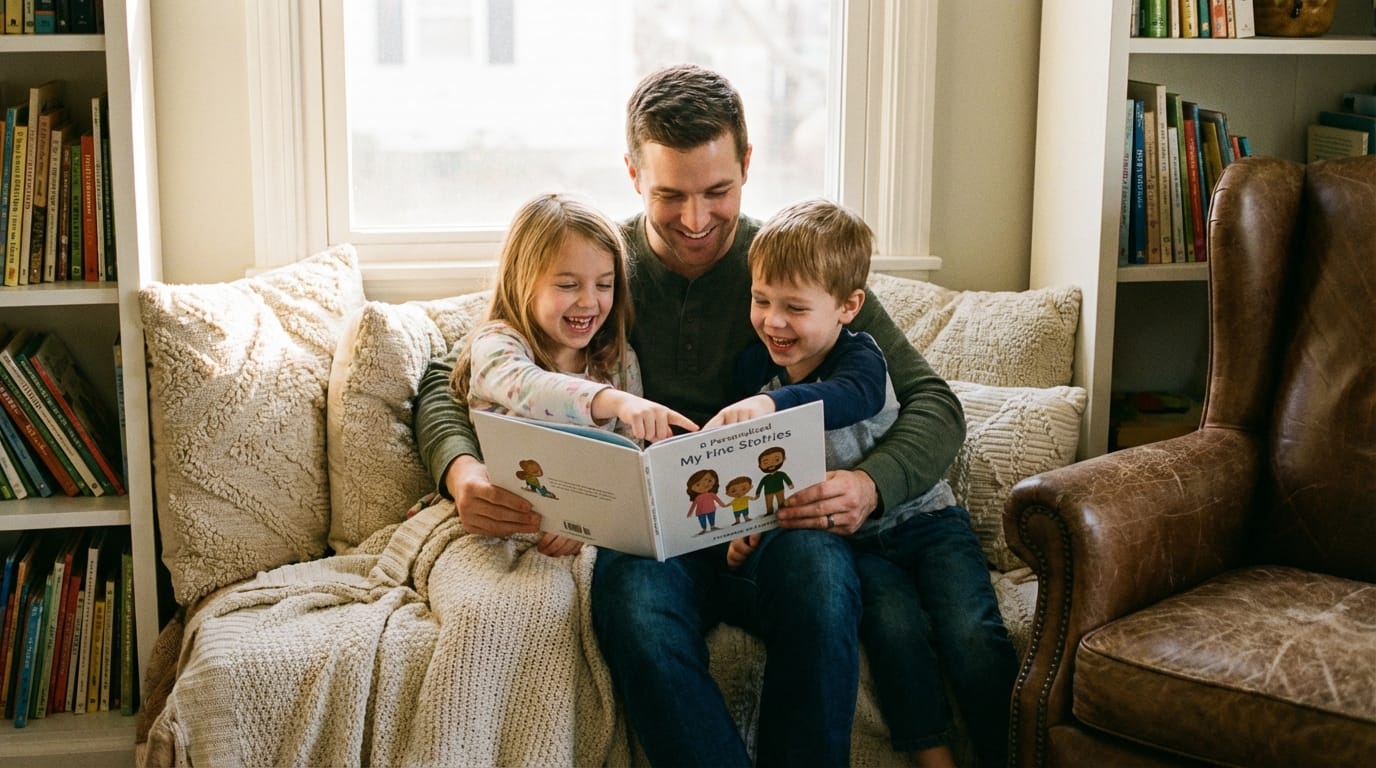
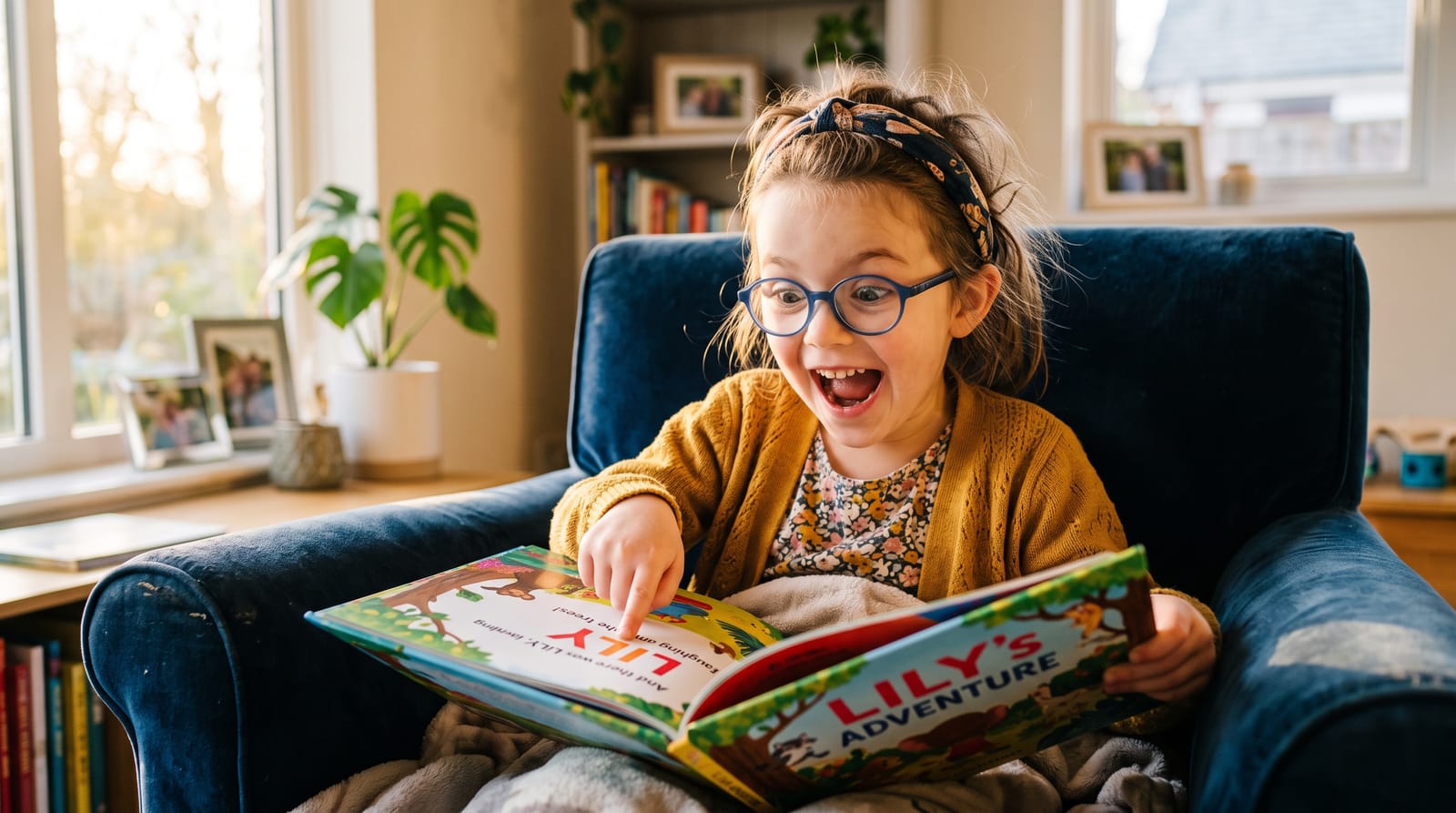
In the quiet moments before sleep, when the lamp is dimmed and the world outside slows down, a book becomes more than just paper and ink. For a child, it is a mirror. For a parent, it is a bridge. While the initial magic of a personalized book often lies in the "aha!" moment—the second a child realizes the character on the page shares their name—the true, lasting value of these stories runs much deeper.
In {YEAR}, we are seeing a significant shift in how we approach children’s literature. It is no longer just about the "solo hero" on a quest. Instead, modern storytelling is increasingly focused on the child’s place within their most important ecosystem: the family.
At StorytimeHero, we believe that personalized books are uniquely positioned to address the complexities of family life, from the daily rhythm of shared chores to the grand, abstract concept of universal belonging. By placing a child and their loved ones at the center of the narrative, we aren’t just giving them a story; we are giving them a sense of home.
From Solo Hero to Team Member: Redefining Family Roles
Traditionally, children’s books follow a linear path where a protagonist overcomes a hurdle. While empowering, this can sometimes inadvertently reinforce a "me-centric" worldview. Personalized books are changing this dynamic by reframing the child not just as a hero, but as a vital part of a family team.
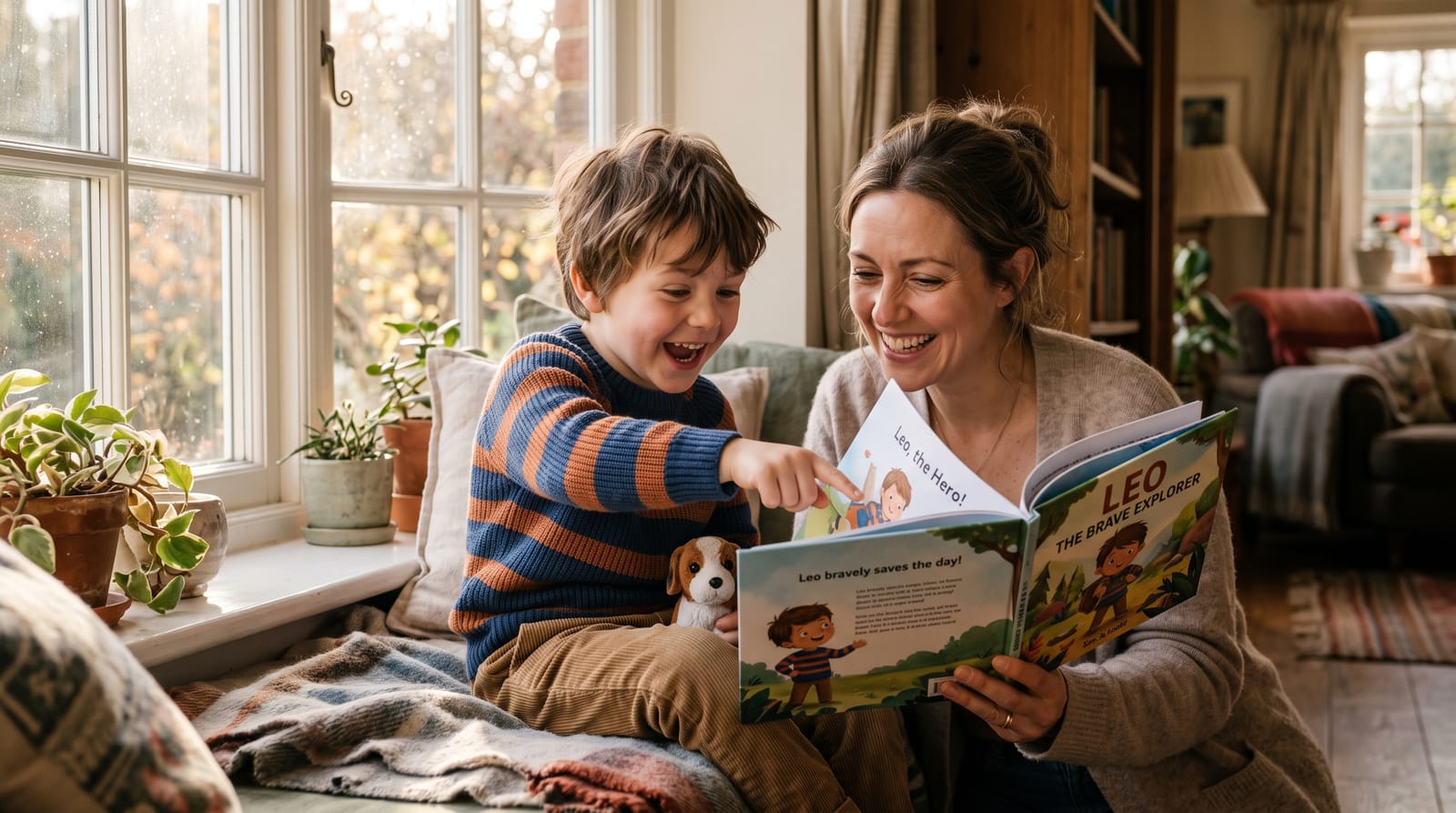
When a child sees themselves helping a sibling solve a puzzle or joining a parent on a whimsical adventure, the narrative shifts from "What can I do?" to "What can we do together?" This subtle change in perspective is a powerful tool for social-emotional development. It teaches children that their presence matters to the group and that their contributions—no matter how small—are what make the family unit function.
This "team" mentality is essential for navigating the transitions of childhood. Whether it’s a new sibling entering the home or a move to a new town, seeing the family unit represented as a cohesive, unbreakable squad in a book provides a sense of security that generic stories simply cannot replicate.
Modeling Responsibility and the "Betterment of the Whole"
One of the most challenging aspects of parenting is teaching children that they are active participants in the household, not just "guests" in a hotel managed by Mom and Dad. Recent parenting trends have highlighted the importance of a "responsibility framework"—the idea that children should contribute to the family’s well-being because they are part of the community, rather than just to earn a prize.
Personalized books can act as a gentle, non-didactic rehearsal for these real-world responsibilities. Imagine a story where the child’s character is tasked with "preparing the royal feast" (setting the table) or "organizing the explorer’s quarters" (cleaning their room) as part of a grander mission.
By weaving these "family responsibilities" into the fabric of an adventure, we remove the friction of the "chore." The story validates the child’s effort, showing them that when they contribute, the whole family thrives. It moves the conversation away from "Do this because I said so" and toward "Look at how our family flourishes when we all play our part."
The "Galactic Family": Fostering a Sense of Universal Unity
While the immediate family is the primary focus, personalized storytelling also has the power to expand a child’s circle of empathy. There is a beautiful concept emerging in contemporary literature: the idea of the "Galactic Family." This perspective suggests that while our immediate household is our "core," we are also part of a much larger, interconnected human family.
Personalized books can bridge this gap by placing the child in diverse settings or cosmic adventures where they interact with characters from all walks of life. When a child sees their own name and likeness interacting with a global or even "galactic" community, it fosters a sense of unity. It teaches them that while they are unique and special, they are never alone. They belong to the world.
This sense of belonging is a foundational pillar of mental well-being. Knowing that you have a place in your family, your community, and the universe at large creates a "security blanket" of identity that helps children face the outside world with confidence.
Creating "Cozy Connection" Rituals in a Digital Age
We live in an era of fragmented attention. Between streaming services, apps, and the general busyness of modern life, finding moments of true, undistracted connection can be difficult. Many parents find themselves looking for "screen-time assists" or curated playlists to keep children engaged, but there is no substitute for the tactile, shared experience of a book.
Personalized stories create what we like to call "The Architecture of Cozy." When a family sits down to read a book that features their own names, pets, or home state, the engagement level triples. It isn’t just "reading time"; it’s "us time."
These books become the anchors for family traditions. Much like the way families might gather for a specific movie release or a holiday special, a personalized book becomes a "comfort pick." During the colder months—what some call the "hibernation season"—these stories provide a warm, emotional hearth. They offer a reason to hunker down, slow down, and reconnect after a long day of separate activities.
The Psychology of Seeing "Us" in Print
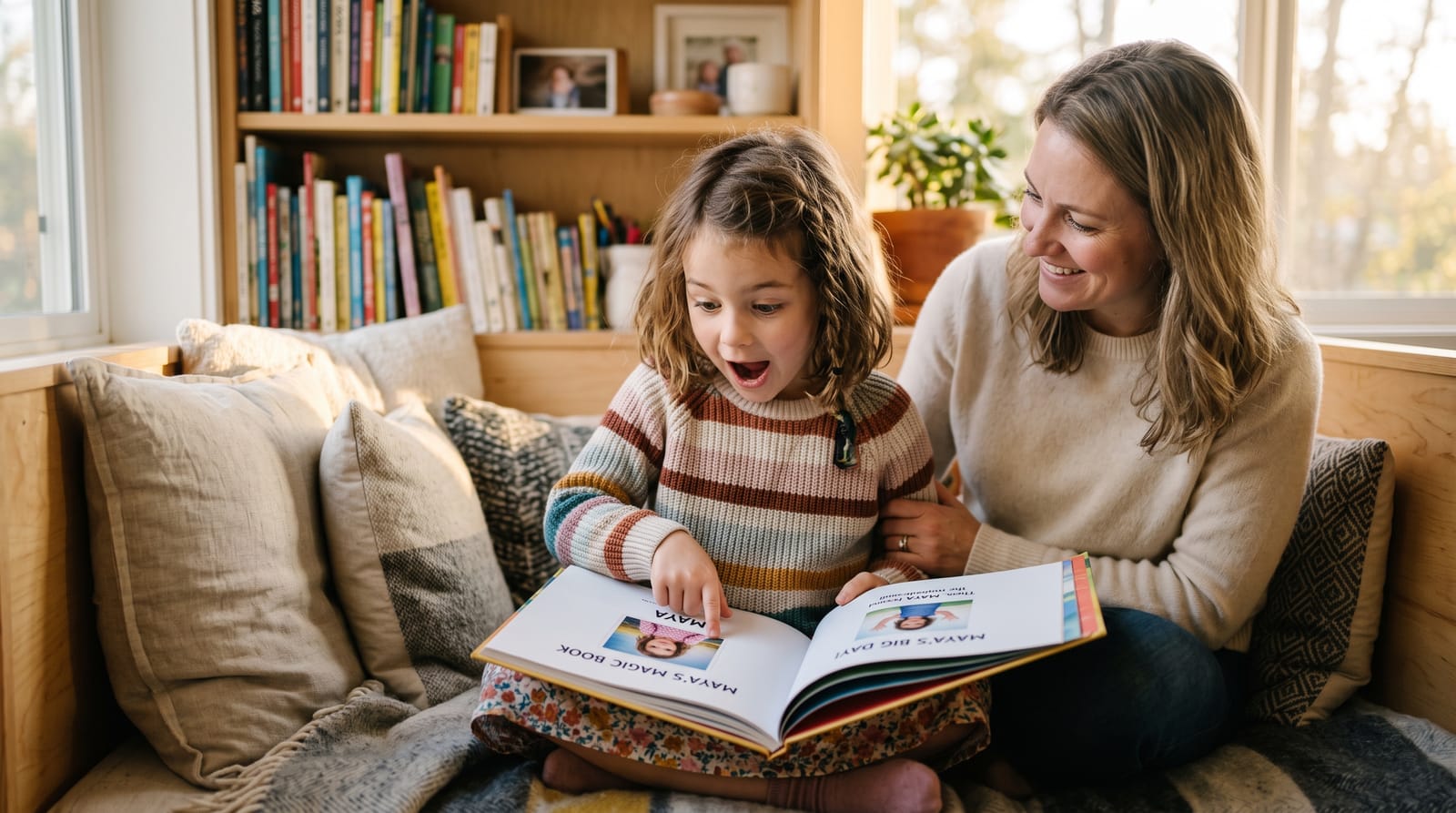
Why does personalization work so well for family bonding? From a psychological perspective, it touches on Attachment Theory. A child’s primary need is to feel seen and safe within their attachment to their caregivers. When a parent reads a book where both the child and the parent are characters, it reinforces that bond in a physical, permanent medium.
Furthermore, the "Name-Recognition Effect" ensures that the child is paying maximum attention. When they hear their name, their brain’s "self-representation" system lights up. By linking that positive self-representation with family themes, we are essentially "hard-wiring" the association between the child’s identity and their family’s love.
This is why many families find that personalized books aren’t just read once and shelved. They become keepsakes. They are the books that are saved in "memory boxes" long after the child has outgrown the reading level, because they represent a specific era of the family’s history.
Practical Ways to Use Personalized Books for Family Growth
If you are looking to deepen your family connection through storytelling, consider these approaches:
- The "New Milestone" Script: Use a personalized book to prepare for a change. If you’re welcoming a new baby, a book starring the older sibling as a "Super Big Brother/Sister" helps them visualize their new role.
- The "Gratitude" Routine: After reading a story about family adventures, ask your child, "What’s one thing our 'team' did well today?" This connects the narrative of the book to the reality of your day.
- The Intergenerational Link: Books that include grandparents are incredibly powerful. They help children understand their lineage and the idea that family extends across generations. For more on this, see our guide on Best Personalized Books for Grandparents.
FAQ: What Parents Ask About Family Personalization
Strengthening the Bond, One Page at a Time
At the end of the day, a family is a story that we are all writing together. Every meal shared, every chore completed, and every bedtime story read is a sentence in that ongoing narrative. Personalized books simply give us a way to see that story more clearly.
By choosing stories that emphasize unity, responsibility, and the "galactic" scale of human connection, we are doing more than just teaching our children to read. We are teaching them who they are, where they belong, and how much they are loved. In a world that often feels fast and impersonal, a custom book is a quiet, beautiful reminder that within the walls of your home, your child is—and always will be—the hero.
***
Related Reading
Free preview checklist
Get the personalized book gift checklist
Know what photo to use, what to write in the dedication, and what to review before ordering.