How to Do Reading Time When You're a Busy Working Parent
Start a cover preview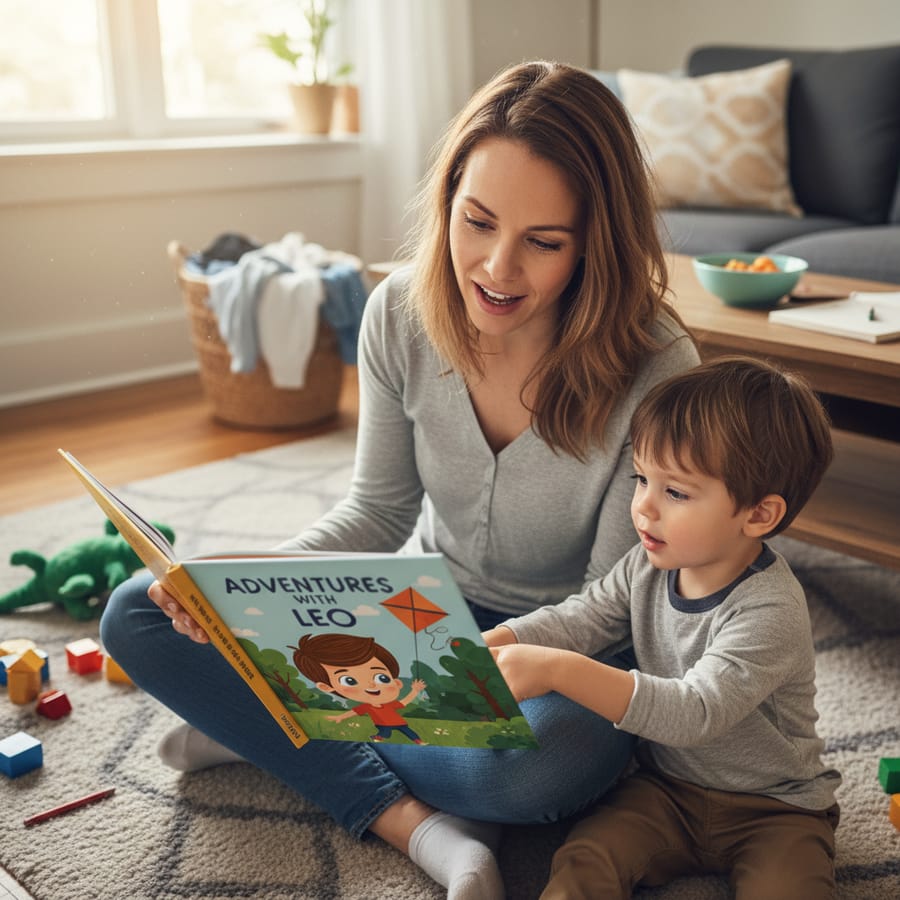
You know that feeling when you finally walk through the door after a long day at work? Your feet are tired, your brain is still buzzing with emails, and the kitchen counter is buried under a mountain of mail and half-eaten snacks. You want to be the parent who sits down for a magical hour of reading time, but reality usually has other plans. Between making dinner, finishing laundry, and getting everyone through the "bath time battle," finding a moment to open a book can feel like a luxury you just don’t have. You love your child and you know how important literacy is, but sometimes the guilt of skipping a story feels heavier than your work bag.
The good news is that you don’t need to be a perfect "Pinterest parent" to make a huge impact on your child’s life. You don’t need an hour of silence or a dedicated library wing in your house. Reading with your child is about connection, not perfection. Even if you only have five minutes between the microwave beeping and the lights going out, you can create a meaningful experience. In this guide, we’re going to look at how you can fit reading time into your hectic schedule without losing your mind, and how new tools like personalized children's books can make those short moments more powerful than you ever imagined.
Why Reading Time Still Matters (Even on Your Busiest Days)
When you’re exhausted, it’s easy to think, "We’ll just skip it tonight; they won't remember anyway." But the truth is, those few minutes of sitting side-by-side do more than just teach them how to recognize letters. For a child, this is the one part of the day where they have your undivided attention. In a world of screens and "hold on a second, Mommy's on a call," a book is an island of calm.
Research shows that even ten minutes of daily reading can significantly improve a child’s vocabulary and emotional intelligence. But for a busy parent, the biggest benefit is often the "de-stress" factor. When you focus on a story, your own heart rate slows down. It’s a transition from the "work version" of you to the "parent version" of you. It signals to your child that they are your priority, regardless of how many meetings you had that afternoon.
Furthermore, reading helps with "executive function." This is a fancy way of saying it helps kids learn how to focus and follow a sequence of events. In a fast-paced world, the ability to sit still and follow a narrative is a superpower. By making reading time a non-negotiable part of your day—even if it's short—you are giving them tools they will use for the rest of their lives.
Turning Small Windows into Quality Reading Time
If you’re waiting for a perfectly quiet hour to read, you’ll be waiting until they’re in college. To make it work as a busy parent, you have to find "the cracks" in your day. Think about those moments where you’re just waiting.
For example, do you have a long commute to daycare? While you shouldn't read a physical book while driving, you can listen to an audiobook together and talk about the pictures later. Or, keep a few custom adventure stories in the car for when you’re stuck in the school pickup line or waiting for a doctor’s appointment.
Another great window is mealtime. If your child is a slow eater, sit with them and read a chapter while they finish their peas. You’re already there with them, so you might as well use that time to dive into a story. This also helps keep them seated and engaged, making dinner a much calmer experience for everyone involved.
Don't be afraid to break the rules of "bedtime stories." Who says you can't have "breakfast stories"? If your mornings are calmer than your evenings (lucky you!), try reading a quick story over cereal. The goal is to integrate literacy into your life rather than trying to build your life around a rigid schedule.
How Personalized Children's Books Supercharge Short Reading Sessions
One of the biggest challenges for busy parents is keeping a child’s attention. If you only have ten minutes for reading time, you don't want to spend five of those minutes trying to get your child to stop wiggling or looking at their toys. This is where the power of personalization comes in.
At StorytimeHero.ai, we’ve seen firsthand how a child’s face lights up when they realize they are the hero of the story. When a child sees their own face in the illustrations—thanks to our AI-generated technology—their engagement levels skyrocket. They aren't just listening to a story about a generic knight or an astronaut; they are watching themselves save the day.
This level of engagement is a game-changer for busy parents because:
- Instant Focus: Kids are naturally more interested in themselves. They will settle down faster to see what "their" character does next.
- Emotional Connection: Seeing themselves as the hero builds confidence and makes the lessons in the story stick.
- Memory Retention: Children remember stories better when they are personally involved in the plot.
- Re-readability: A personalized story with their face becomes their favorite book instantly, meaning you don't have to constantly hunt for new material.
By using AI-powered personalized books, you make every minute of your limited reading time count twice as much. You’re not just reading; you’re building their self-esteem and making them fall in love with the idea of books.
Creating a Low-Stress Reading Time Routine
The key to consistency is making the routine so easy that you can do it even when you're running on two hours of sleep. You don't need a fancy reading nook with fairy lights (though those are nice). You just need a "trigger" that tells your child's brain it's time to focus.
Try "habit stacking." This means you attach reading to something you already do every single day. For example: "After we put on pajamas, we read one story." Or, "After we clear the dinner table, we look at three pages." When the routine is tied to a physical action, it becomes automatic. You won't have to argue about it because it's just "what we do next."
Also, give yourself permission to keep it short. A "one-book limit" is perfectly fine for those nights when you're exhausted. In fact, knowing that the commitment is small makes you more likely to actually do it. If you tell yourself you have to read for 30 minutes, you’ll find excuses to skip it. If you tell yourself you only have to read five pages of their personalized adventure, you’ll find it much easier to start.
Overcoming Common Obstacles to Daily Reading Time
Let’s be real: some days are harder than others. Your child might be cranky, or you might have a deadline looming. Here is how to handle the most common roadblocks:
1. The "I'm Too Tired" Wall
We’ve all been there. You’re halfway through a sentence and your eyes start to close. On these nights, try a "Picture Walk." Instead of reading every word on the page, just look at the pictures and ask your child what’s happening. If it's a personalized book from StorytimeHero.ai, ask them, "What are you doing in this forest?" or "What color is your superhero cape?" This keeps them engaged while requiring much less "brain power" from you.
2. The Screen Time Struggle
It’s tempting to just hand them a tablet so you can get things done. If your child is resistant to books because they want a show, try to bridge the gap. Use a book that feels "high-tech" or exciting. This is why our AI-generated illustrations are so effective—they have the visual pop and excitement of a movie, but they are contained within the healthy format of a book.
3. The Reluctant Reader
Some kids just don't want to sit still. For these "active" readers, try books that involve movement. Ask them to act out the actions in the story. If the character in the book is running, have them jog in place. If the character is sleeping, have them pretend to snore. Making reading time an active experience helps burn off that last bit of toddler energy before bed.
Practical Tips for Busy Moms and Dads
If you want to start tonight, here are some actionable tips to make your life easier:
- Keep books everywhere: Put a small basket of books in the car, in the bathroom, and in the kitchen. If a book is within arm's reach, you're more likely to pick it up.
- Let them choose (within reason): Give your child a choice between two books. This gives them a sense of control and makes them more likely to participate.
- Use the "Five-Minute Rule": Tell yourself you will read for just five minutes. Usually, once you start, you’ll find it’s easier to keep going.
- Make it a "Date": Once a week, maybe on a Saturday morning, have a longer "Reading Date" where you go to a library or spend 20 minutes with a special personalized storybook.
- Don't worry about the voices: You don't have to be an actor. Your child loves the sound of your natural voice more than any character voice you could invent.
- Record yourself: If you travel for work, record a video of yourself reading their favorite book. They can "read with you" even when you're in a different time zone.
The Magic of Seeing Themselves in the Story
At the end of the day, the goal of reading time is to foster a love for stories. When a child sees themselves as the protagonist, the barrier between "the book" and "the real world" disappears. They begin to see themselves as someone who can solve problems, explore new worlds, and be the hero.
For a busy parent, this is the ultimate "hack." You are providing a deep, psychological benefit in a fraction of the time. You aren't just reading a story; you are building their identity. When you use personalized children's books, you are telling your child, "You are important, you are brave, and you are the center of my world," all while simply sitting on the couch for a few minutes.
So, take the pressure off yourself. You don't have to be a perfect teacher or a master storyteller. You just have to be there. Grab a book, find a spot on the rug, and let the adventure begin. Your child won't remember that the dishes weren't done or that you were wearing your work clothes. They will remember that you sat with them, opened a book, and let them be the hero.
Frequently Asked Questions
Related Reading
- The Science Behind Why Kids Love Seeing Themselves in Books
- 5 Bedtime Routines That Actually Work for Working Moms
- How AI is Revolutionizing the Way We Tell Children's Stories
- The Best Personalized Gift Ideas for Toddlers and Preschoolers
- Building Confidence in Kids Through Hero-Based Narratives
- Why Literacy is the Foundation of All Future Learning
- How to Choose the Right Adventure Theme for Your Child
- Tips for Reading to Multiple Children with Different Ages
Free preview checklist
Get the personalized book gift checklist
Know what photo to use, what to write in the dedication, and what to review before ordering.